The Complete Guide to Farmhouse Style
Farmhouse design has evolved far beyond its rural roots. Today it blends rustic charm with modern comfort, creating spaces that feel both timeless and lived-in.
What is Complete Guide to Farmhouse Style?
Farmhouse design has evolved far beyond its rural roots. Today it blends rustic charm with modern comfort, creating spaces that feel both timeless and lived-in.
$$
See the Transformation
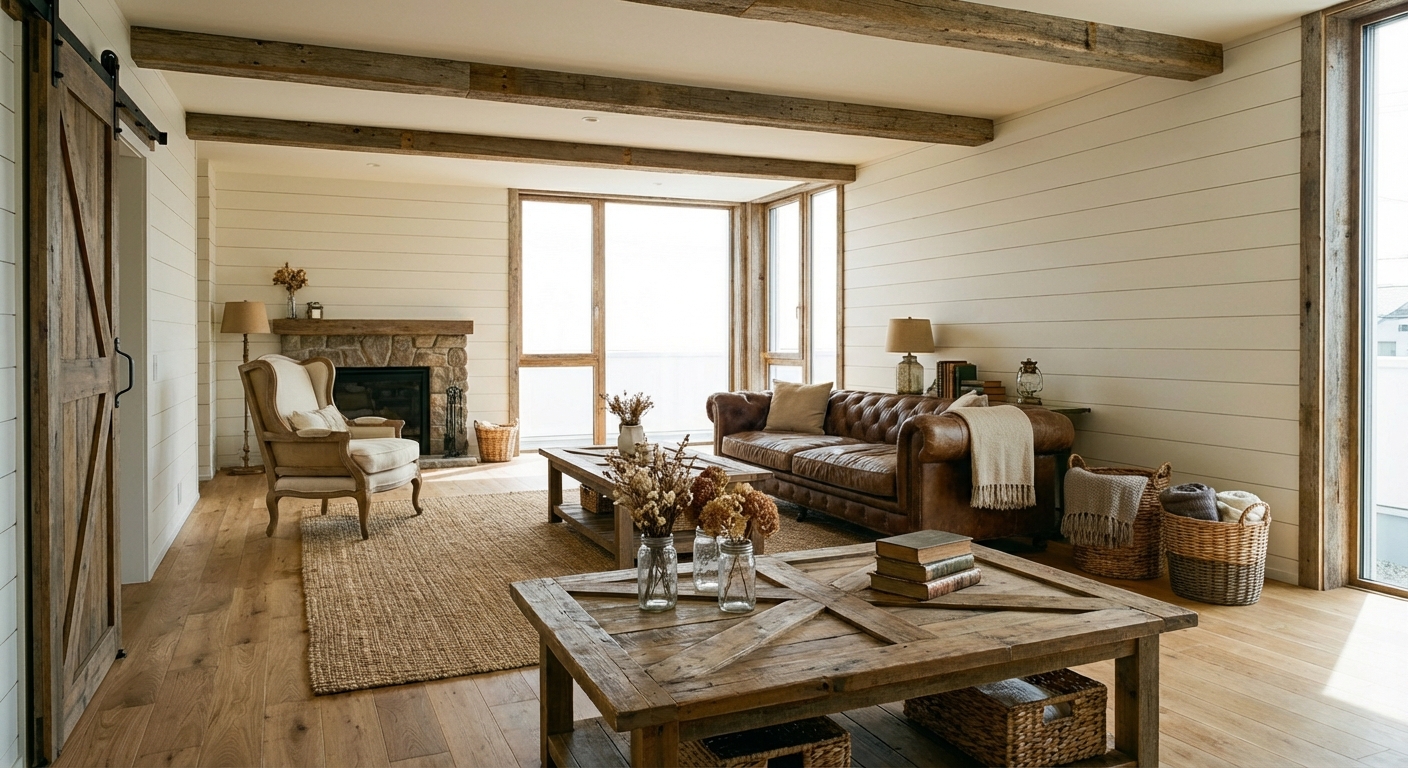
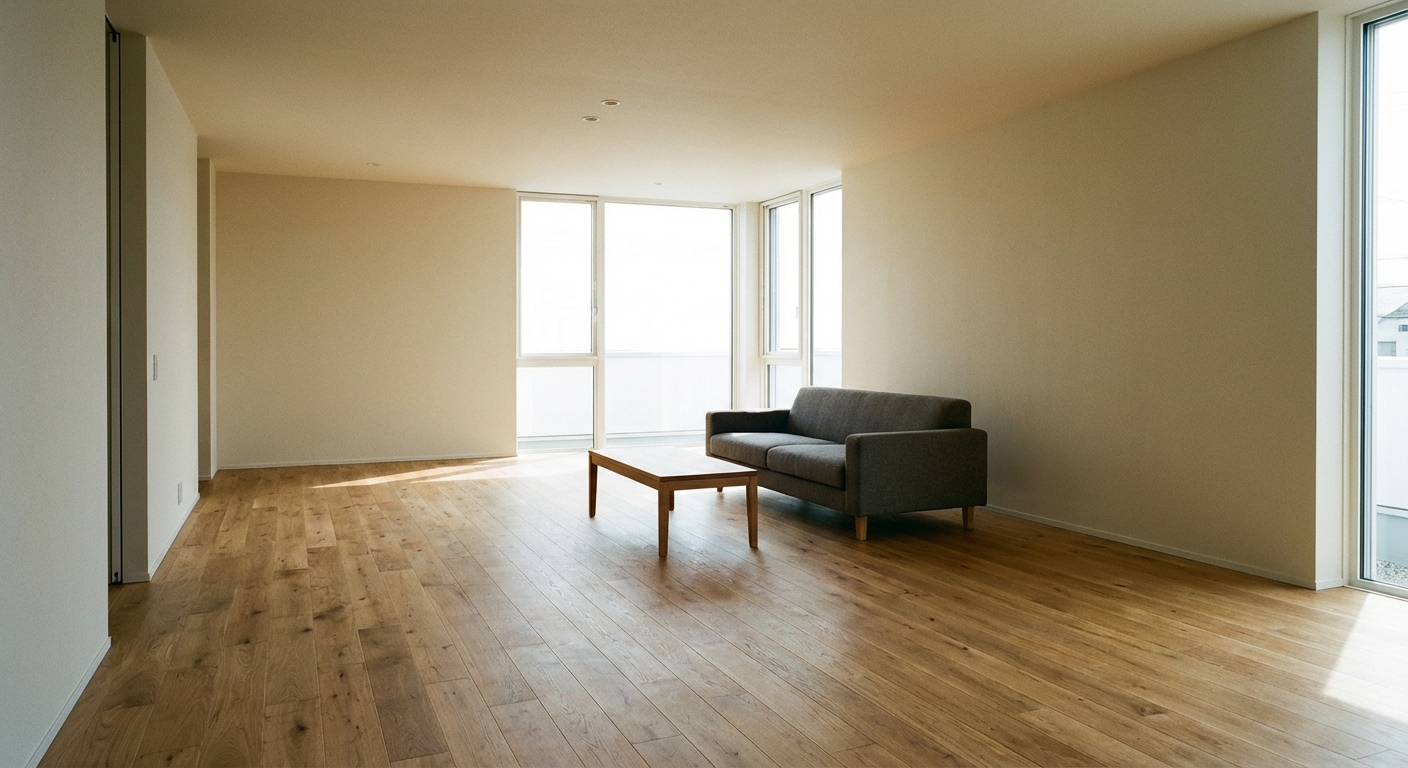
Upload your room photo in the app to see your real transformation
Color Palette
Click any color to copy hex code
Why It Works
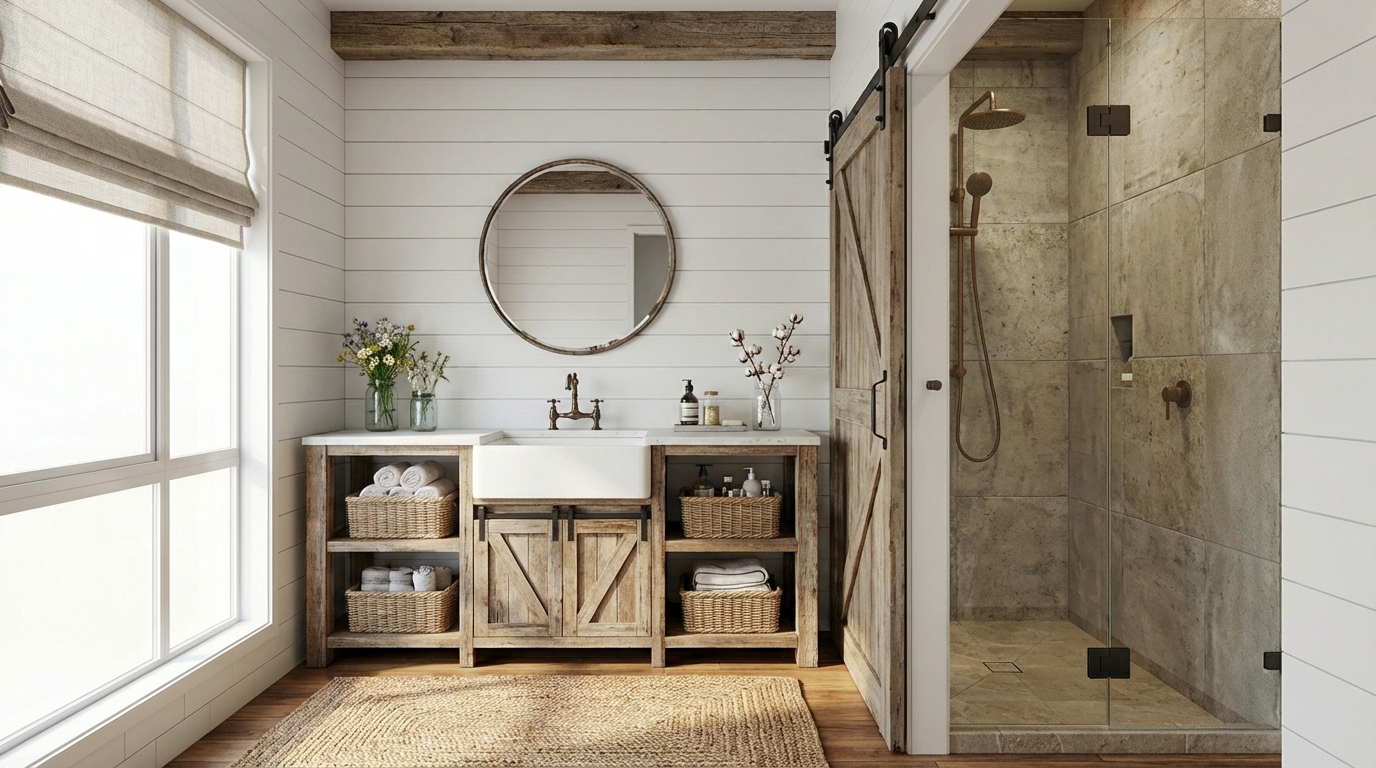
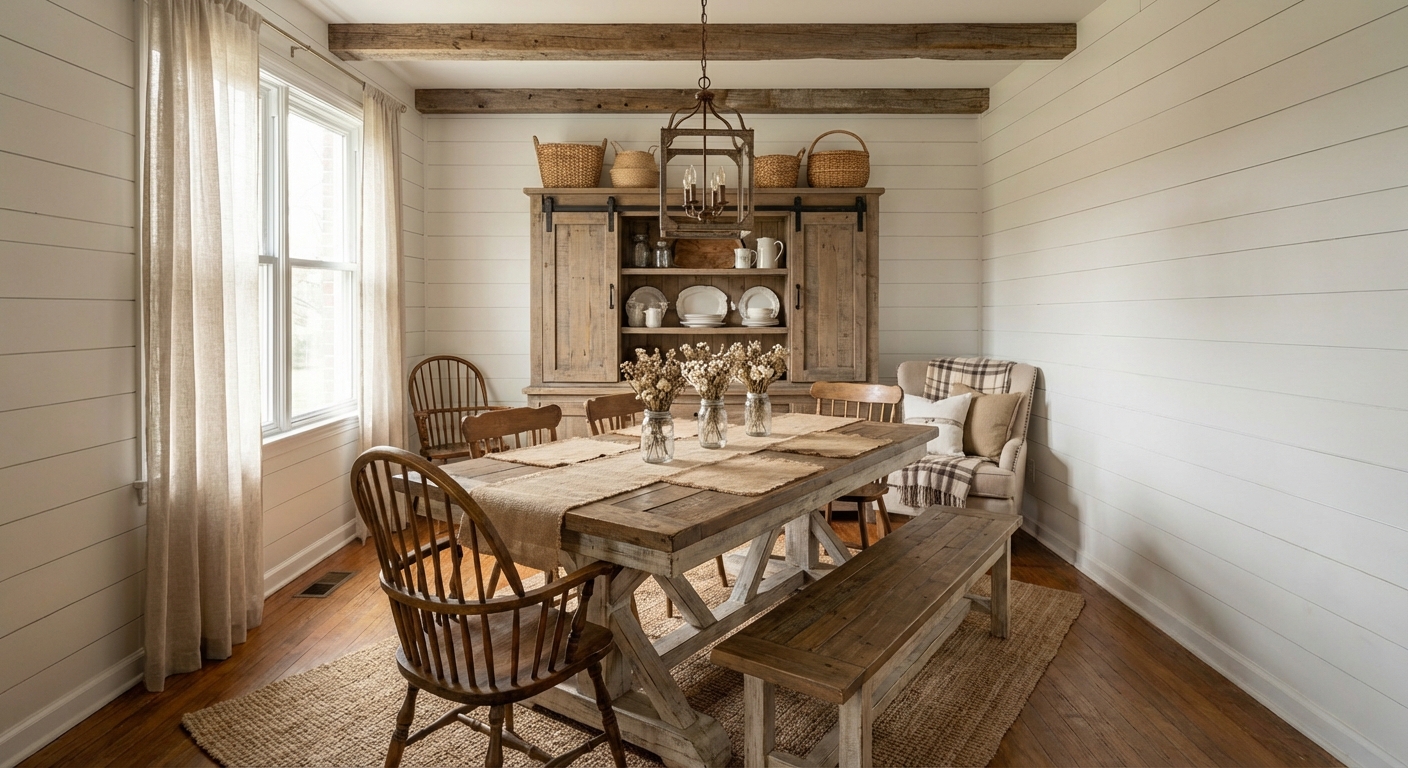
Farmhouse style draws its power from nostalgia and authenticity. Rooted in the practical design of American and European agricultural homes, it celebrates materials that were chosen for durability rather than show — reclaimed wood, wrought iron, natural stone, and linen. The style gained mainstream appeal through the "modern farmhouse" evolution, which softened rough textures with white paint, clean lines, and curated vintage finds. This combination of rustic honesty and refined simplicity creates spaces that feel instantly welcoming. Farmhouse design works psychologically because it references a simpler, slower way of living — open kitchens designed for gathering, wide-plank floors that show their age with grace, and furniture that invites you to sit down and stay. The apron-front sink, the shiplap wall, and the barn door are not just design elements; they are cultural symbols of home and hearth.
How to Achieve This Look
- 1
Install shiplap or board-and-batten on one accent wall
- 2
Choose a farmhouse dining table in reclaimed or distressed wood
- 3
Add vintage accessories like galvanized metal, mason jars, and crockery
- 4
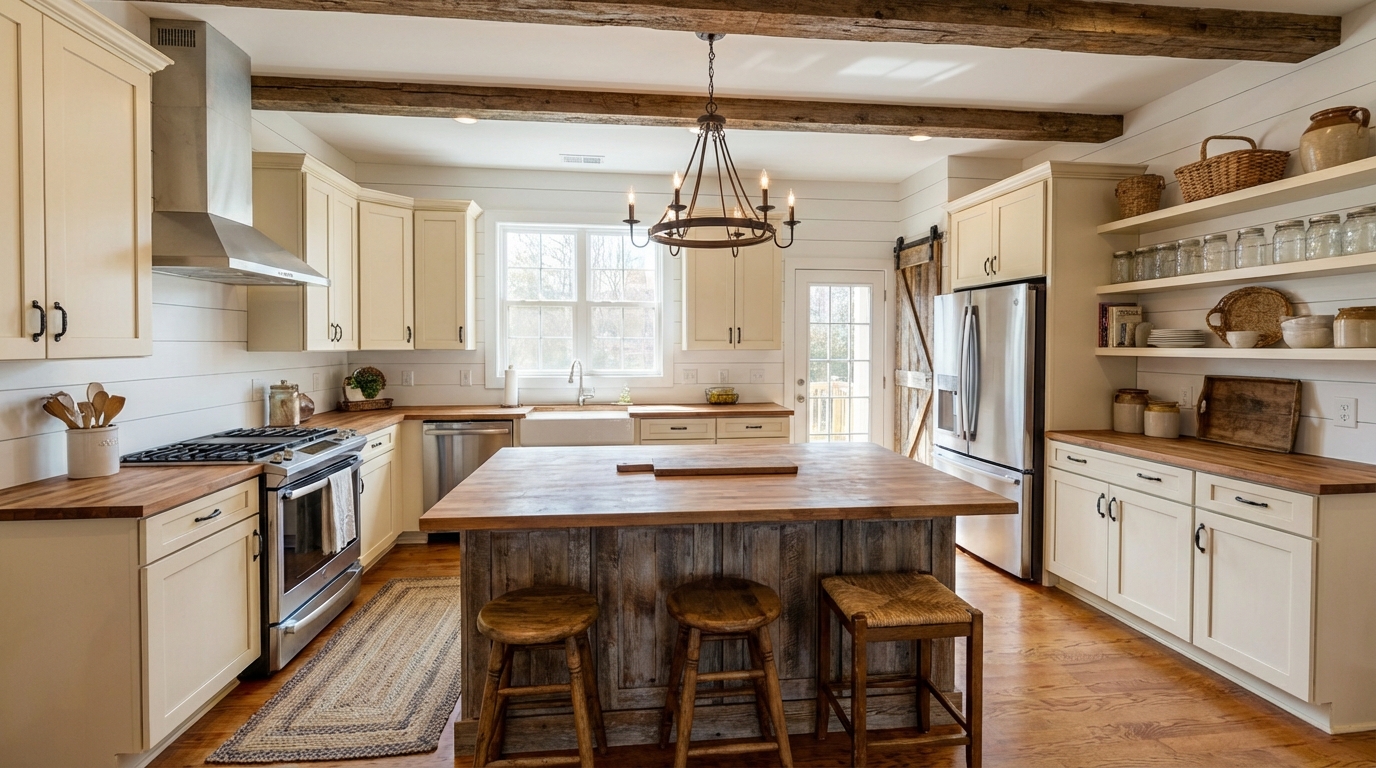
Use open shelving in the kitchen with curated dishware displays
- 5
Install a classic apron-front sink as a kitchen focal point
- 6
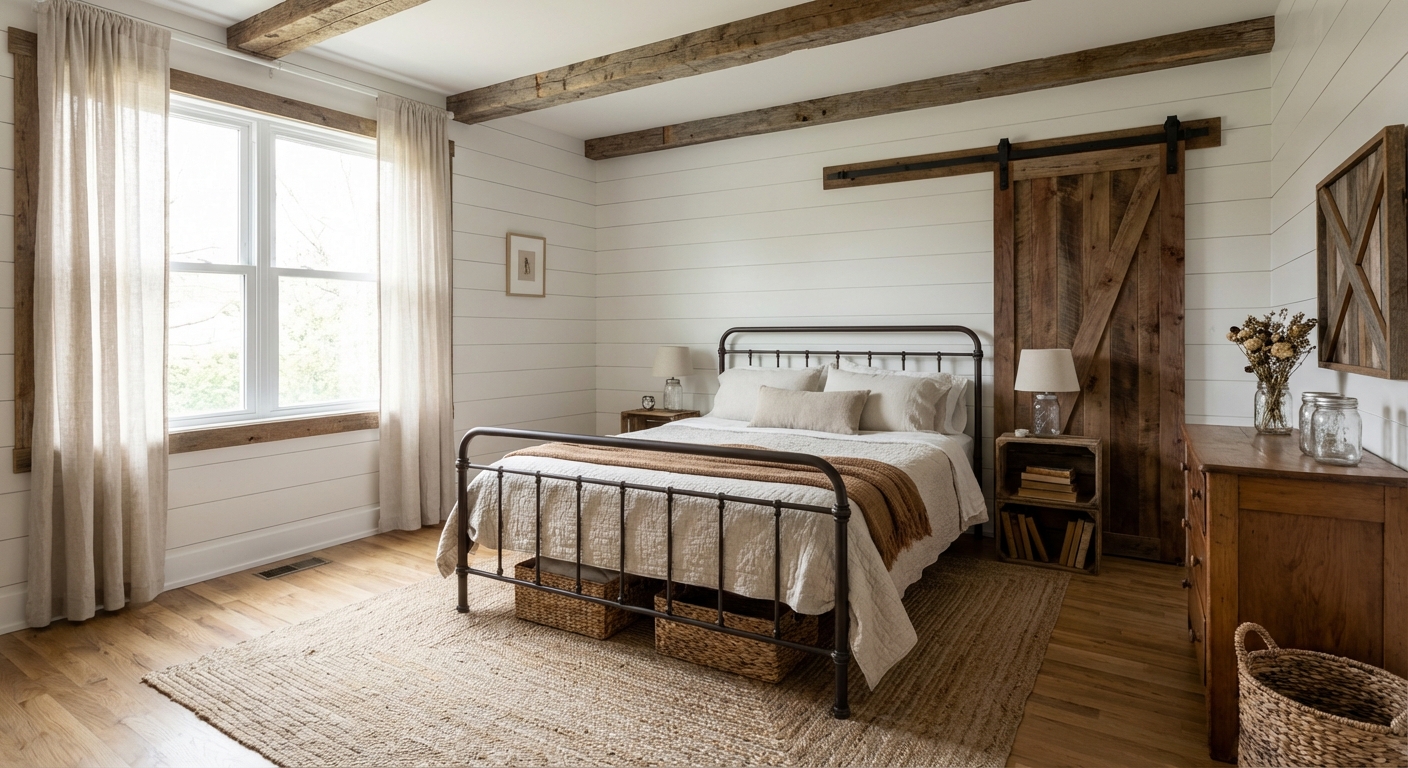
Layer natural textiles in cotton, linen, and burlap
Mix genuinely old pieces with new farmhouse reproductions — an all-new farmhouse room looks like a catalog, not a home.
Intero lets you visualize the farmhouse transformation before committing to shiplap, new hardware, or paint. Upload any room photo and see how white-painted walls, reclaimed wood accents, and farmhouse fixtures would look in your specific space — whether you are going full farmhouse or adding subtle country touches to a modern home.
"I redesigned my entire apartment before buying a single piece of furniture."
— Sarah M.
How They Compare
Try both styles with Intero AI — upload a photo and compare side by side
Frequently Asked Questions
Q1 What is the difference between farmhouse and modern farmhouse?
Traditional farmhouse leans heavily on vintage, rustic, and country elements — think floral patterns, antique furniture, and heavily distressed finishes. Modern farmhouse keeps the warmth and natural materials but adds clean lines, contemporary fixtures, and a more restrained, curated approach to accessories.
Q2 What are must-have elements for farmhouse style?
Shiplap or beadboard walls, wide-plank wood floors, an apron-front sink, barn-style or industrial lighting, open shelving in the kitchen, natural fiber textiles, and at least a few vintage or reclaimed pieces that add authentic character.
Q3 Does farmhouse style work in apartments?
Yes. Focus on portable elements: linen textiles, a jute rug, vintage accessories, and farmhouse-style furniture. Removable shiplap panels and peel-and-stick beadboard wallpaper can add wall texture without permanent changes.
Q4 Is farmhouse style going out of trend?
The heavily themed version with "gather" signs and excessive shiplap has peaked, but the core principles — natural materials, white foundations, vintage character — remain timeless. Modern farmhouse continues to evolve by incorporating more contemporary and organic elements.
Related searches
These are the next pages people usually open while narrowing this design direction.
Ready to Transform Your Room?
Download Intero and see this design in your space in seconds.
No credit card. No signup. Just results.