Art Deco vs Mid-Century Modern — Gatsby Glamour or Eames Elegance?
Both are iconic 20th-century design movements, but Art Deco celebrates ornamentation while mid-century celebrates functional beauty. Choose your era.
What is Art Deco vs Mid-Century Modern: Glamour vs Simplicity?
Both are iconic 20th-century design movements, but Art Deco celebrates ornamentation while mid-century celebrates functional beauty. Choose your era.
3/4
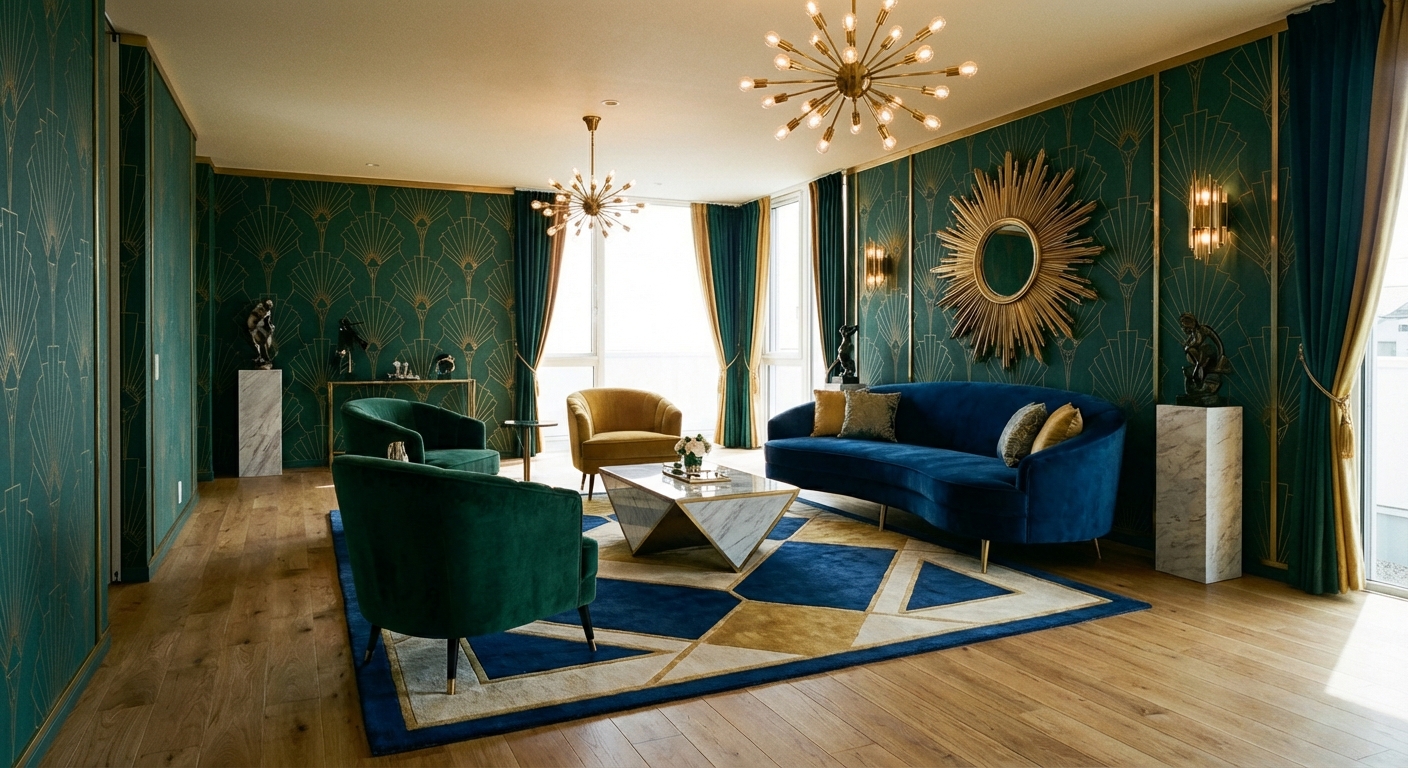
See the Transformation
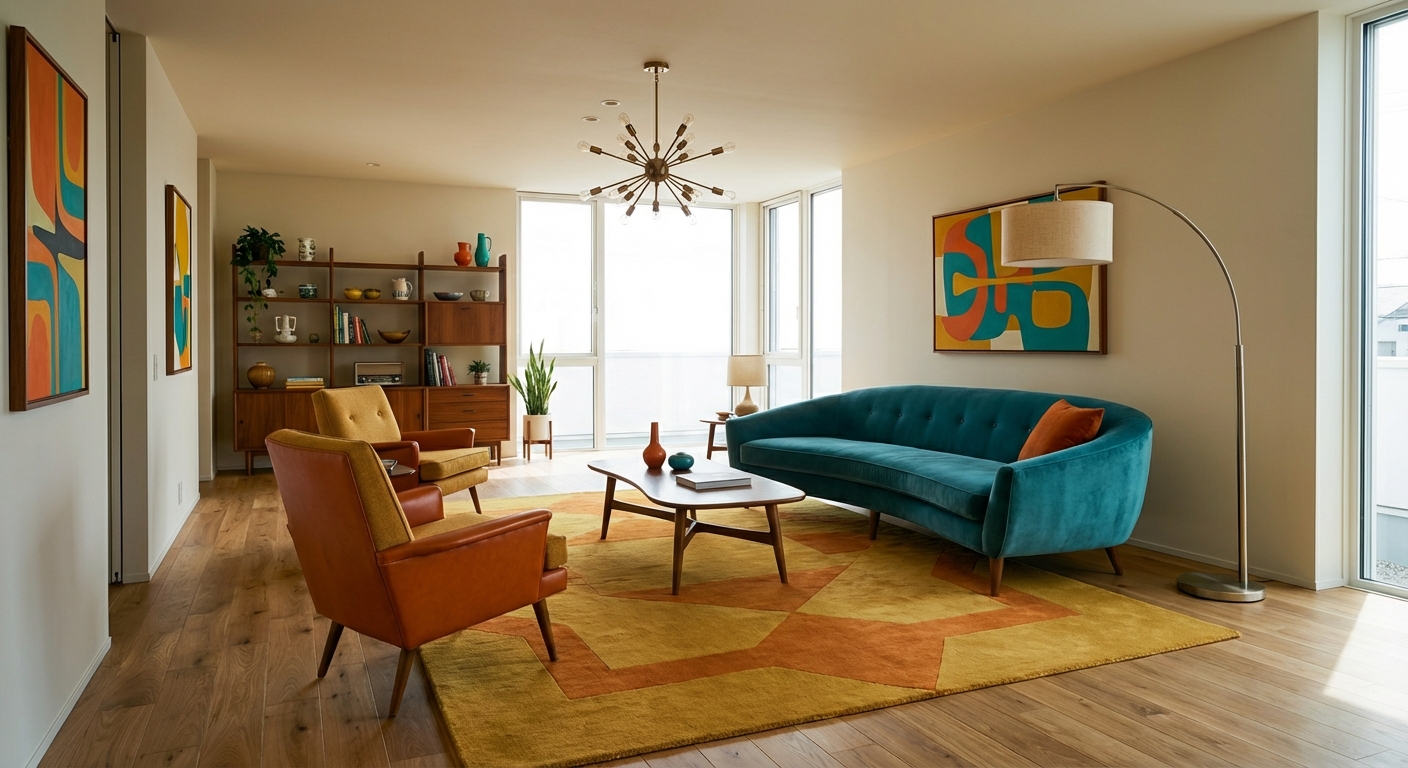
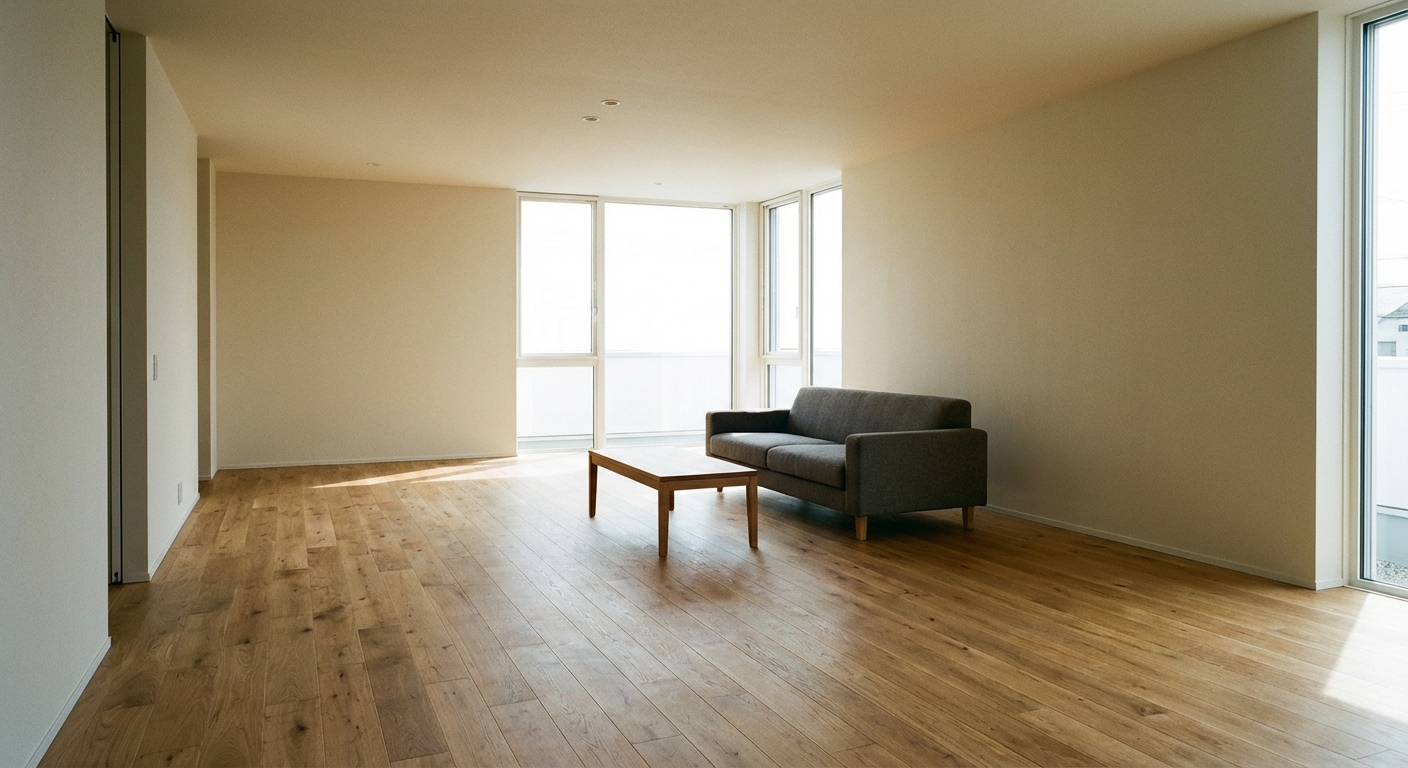
Upload your room photo in the app to see your real transformation
Color Palette
Click any color to copy hex code
Why It Works
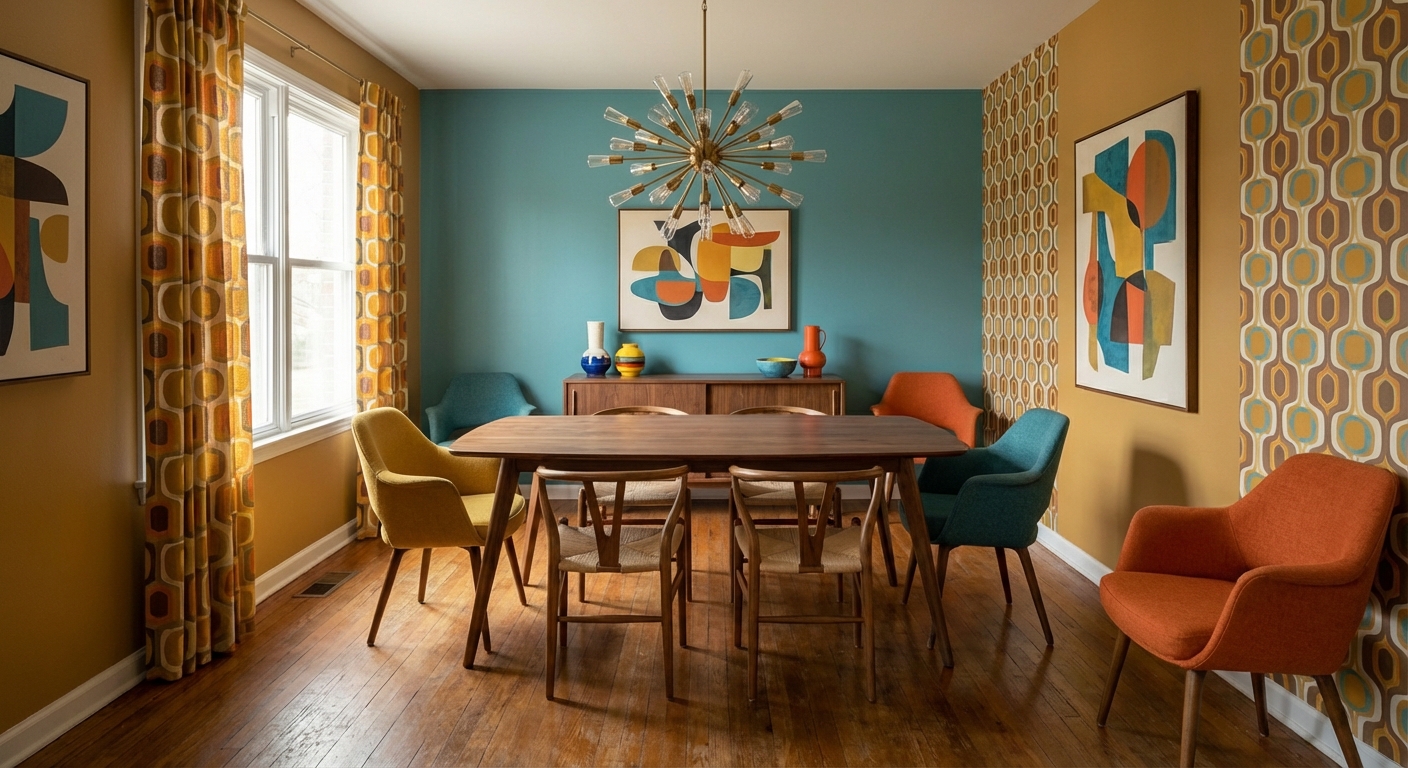
Art Deco emerged in the 1920s from a love of luxury, geometry, and machine-age optimism. It uses bold geometric patterns, rich materials (velvet, marble, gold), and high-contrast color schemes to create dramatic, glamorous spaces. Mid-century modern emerged in the 1950s from a democratic design philosophy — beautiful objects should be accessible to everyone. It uses organic shapes, warm woods, and functional simplicity. Art Deco says "look at this"; mid-century says "sit in this." Both are timeless but attract very different personalities.
Best for
- people who will edit objects, not only add them
- anyone planning a real living room where conversation distance, TV glare, and traffic past the sofa matter more than Pinterest perfection
- projects already thinking about marble, lighting, walnut and needing a coherent layout
Skip if
- you will not address conversation distance and only want a filter look
- you need the room finished tomorrow with zero test fits
Common mistakes
People pin modern living room ideas and then keeping bulky traditional silhouettes and only changing throw pillows. Details like marble, lighting, walnut only work if the plan respects conversation distance, TV glare, and traffic past the sofa. Another miss: pushing every seat against the walls and calling the empty middle “open”.
Decide this first
fix the primary seating pair and one clear path before decorative chairs. Lock few finishes, low profiles, quiet hardware as a short list, then use Intero on a real photo so scale and light are honest before you spend.
How to Achieve This Look
- 1
Decide if you prefer relaxed organic or dramatic geometric
- 2
Mid-century: use warm wood tones and organic shapes
- 3
Art Deco: use lacquer, velvet, and metallic gold
- 4
Mid-century: keep colors muted with bold accents
- 5
Art Deco: go all in with jewel tones and metallics
- 6
Both: invest in statement furniture pieces as focal points
Layout & materials
For Art Deco: use geometric patterns (fan shapes, chevrons, sunbursts), rich materials (velvet, lacquer, brass, marble), jewel-tone colors (emerald, sapphire, ruby), and statement lighting. For mid-century: use organic shapes (egg chairs, tulip tables), warm woods (walnut, teak), restrained accent colors (mustard, teal), and sculptural lighting. The test: Art Deco rooms feel like entering a 1920s hotel lobby; mid-century rooms feel like visiting a design museum.
Mid-century is the relaxed California ranch; Art Deco is the glamorous Manhattan penthouse. Both are retro, worlds apart.
These two styles create dramatically different atmospheres in the same room. Intero AI lets you preview both Art Deco glamour and mid-century simplicity in your space, helping you decide whether you want Hollywood Regency drama or Eames-era sophistication.
Frequently Asked Questions
Q1 Which is more expensive — Art Deco or mid-century?
Art Deco tends to be more expensive because it relies on luxurious materials — velvet, marble, gold leaf, lacquer. Mid-century pieces are available at a wider range of price points, and reproductions of iconic designs are widely accessible.
Q2 Can Art Deco and mid-century elements coexist?
In small doses, yes. A geometric Art Deco mirror above a mid-century walnut credenza can work if they share a material (brass hardware). However, the two styles have opposing philosophies, so balance is important.
Q3 Which style is more timeless?
Both have endured for over 70 years, but mid-century modern has broader current appeal due to its emphasis on function and simplicity. Art Deco is more niche — it appeals strongly to those who love glamour and bold design.
Related searches
These are the next pages people usually open while narrowing this design direction.
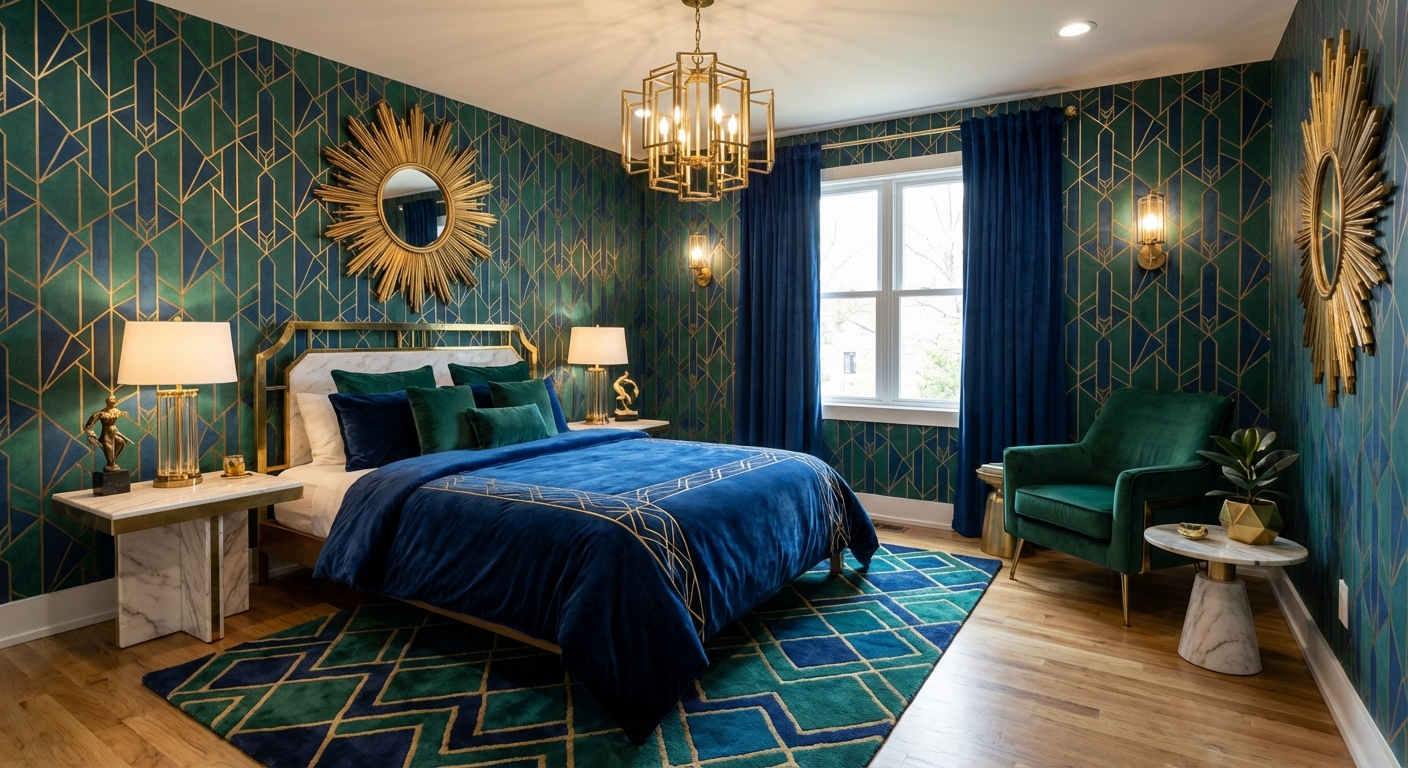
Design Guides You'll Love
Ready to See This Style in Your Room?
Download Intero and preview this design on your own room photo.
No credit card. No signup. Just results.
Scan to download
Point your phone camera at a code

