The Complete Guide to Bohemian Interior Design
Bohemian design is the art of curated eclecticism — layering global textures, rich colors, and personal treasures into spaces that feel collected, not decorated.
What is Complete Guide to Bohemian Style?
Bohemian design is the art of curated eclecticism — layering global textures, rich colors, and personal treasures into spaces that feel collected, not decorated.
1/4
See the Transformation
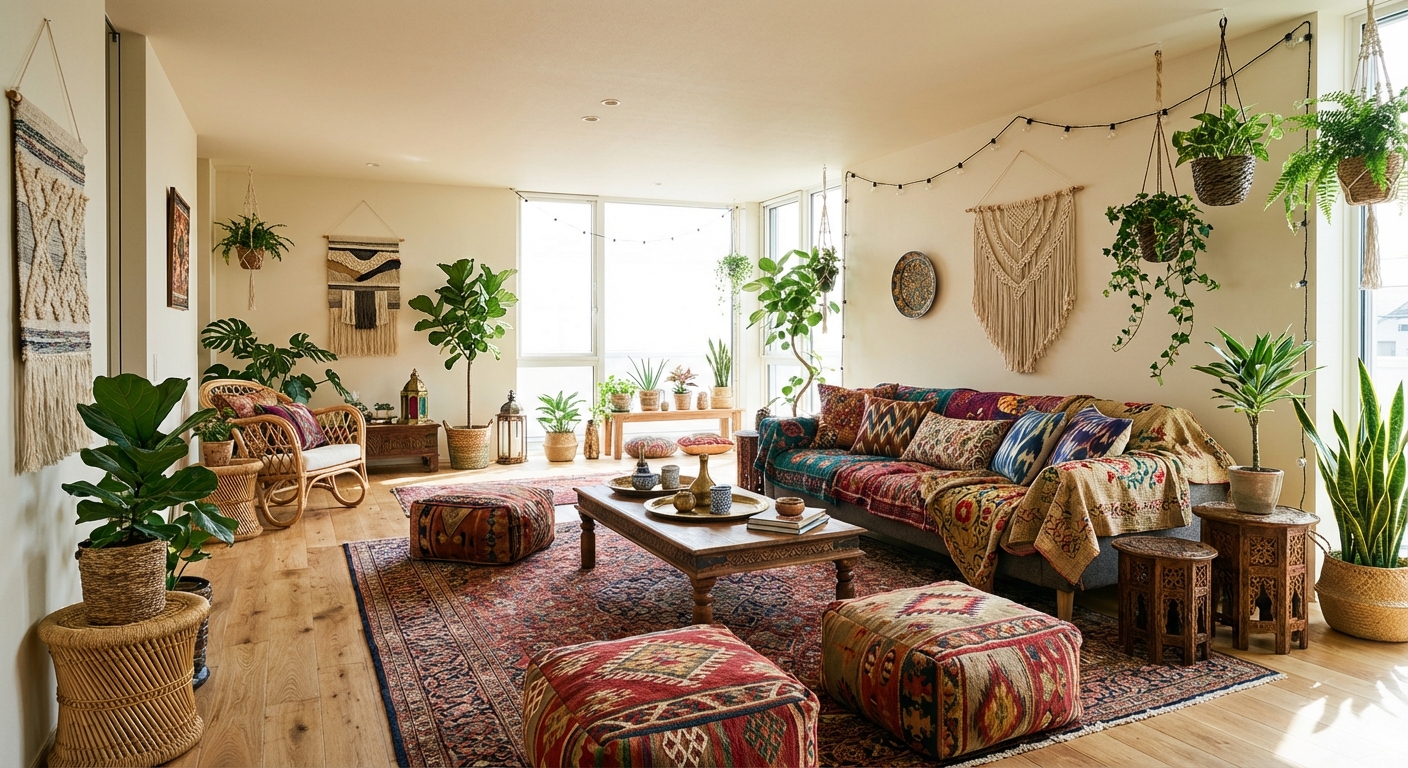
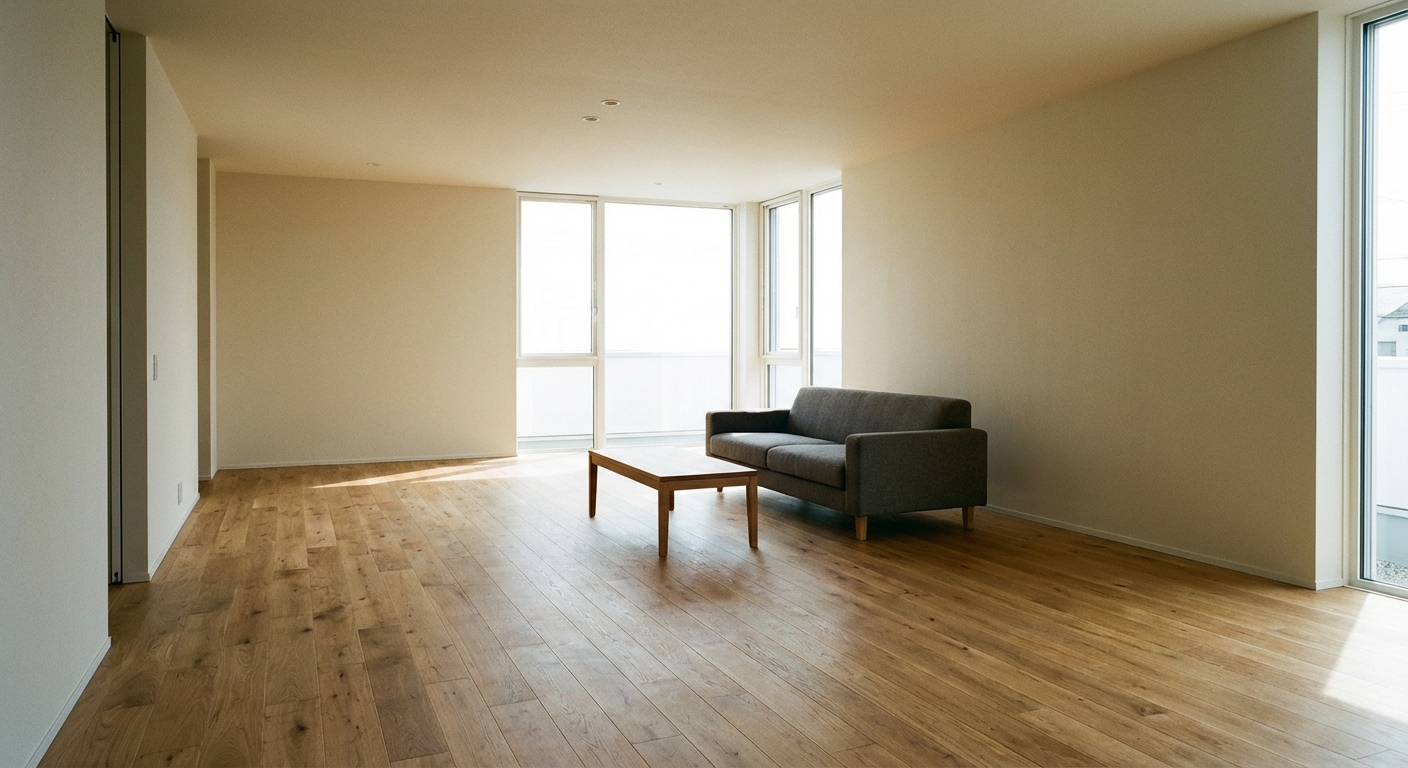
Upload your room photo in the app to see your real transformation
Color Palette
Click any color to copy hex code
Why It Works
Bohemian design takes its name from the bohemians — artists, writers, and travelers of 19th century Europe who rejected conventional aesthetics in favor of personal expression and global influence. The style celebrates imperfection, individuality, and the story behind every object. Unlike styles with strict rules, bohemian design is defined by its freedom: mixing patterns, textures, cultures, and eras without apology. This works psychologically because it creates spaces that feel genuinely personal rather than curated from a catalog. Every object in a bohemian room has a provenance — a market in Morocco, a grandmother inheritance, a local artisan find. This accumulated quality gives bohemian spaces a warmth and authenticity that no single shopping trip can replicate. The layered textures and rich colors create sensory richness that stimulates without overwhelming, making bohemian rooms some of the most comfortable and conversation-starting spaces in interior design.
Best for
- collectors who still want a readable palette anchor
- anyone planning a real living room where conversation distance, TV glare, and traffic past the sofa matter more than Pinterest perfection
- projects already thinking about lighting, pendant and needing a coherent layout
Skip if
- you will not address conversation distance and only want a filter look
- you need the room finished tomorrow with zero test fits
Common mistakes
The usual bohemian living room miss is random thrift piles with no color story or empty breathing room. Details like lighting, pendant only work if the plan respects conversation distance, TV glare, and traffic past the sofa. Another miss: pushing every seat against the walls and calling the empty middle “open”.
Decide this first
fix the primary seating pair and one clear path before decorative chairs. Lock layered textiles, collected objects, warm mix of patterns as a short list, then use Intero on a real photo so scale and light are honest before you spend.
How to Achieve This Look
- 1
Start with a neutral base — white walls and a natural fiber rug
- 2
Layer rugs, throws, and cushions in rich global patterns
- 3
Mix furniture from different eras and origins
- 4
Fill every possible corner with plants of varying sizes
- 5
Hang macrame, tapestries, or a gallery wall of collected art
- 6
Add floor cushions and poufs for flexible seating
Layout & materials
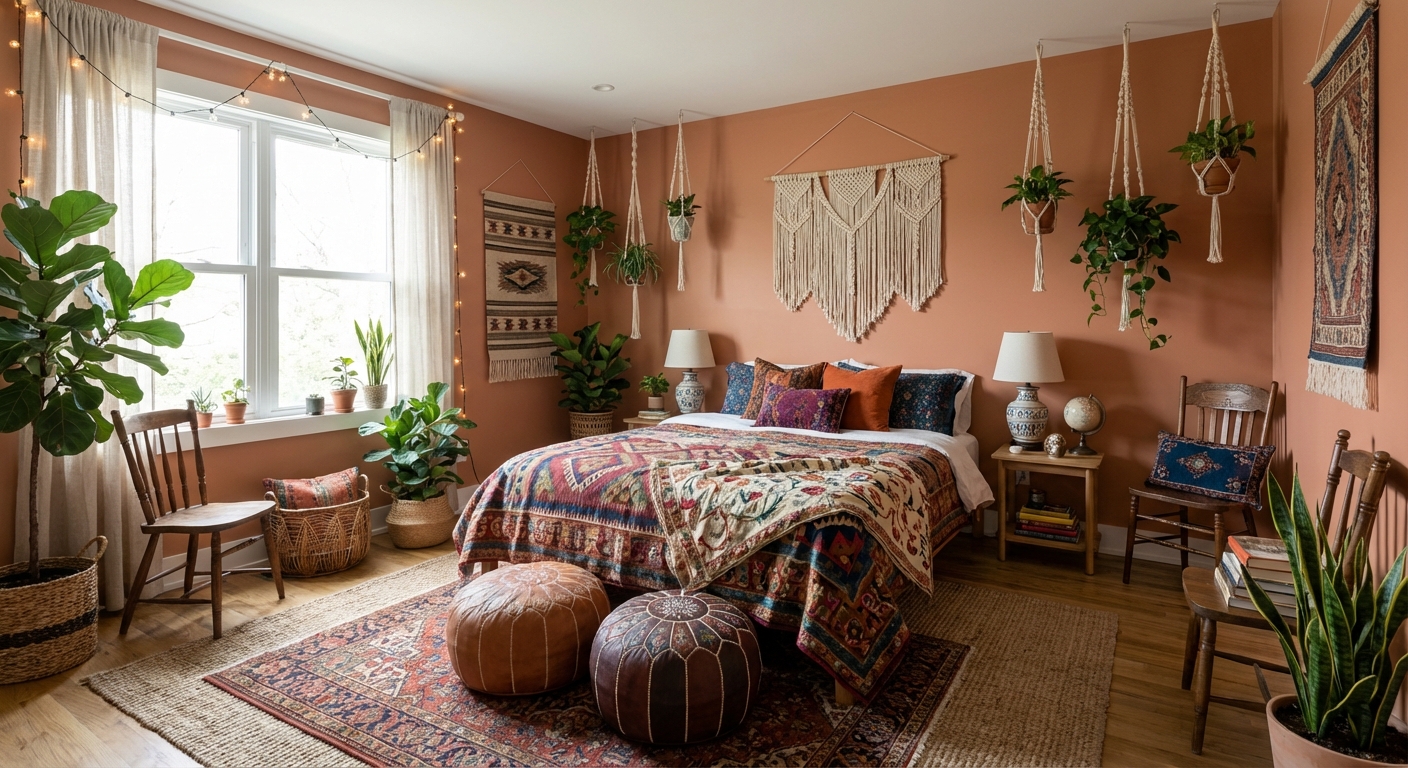
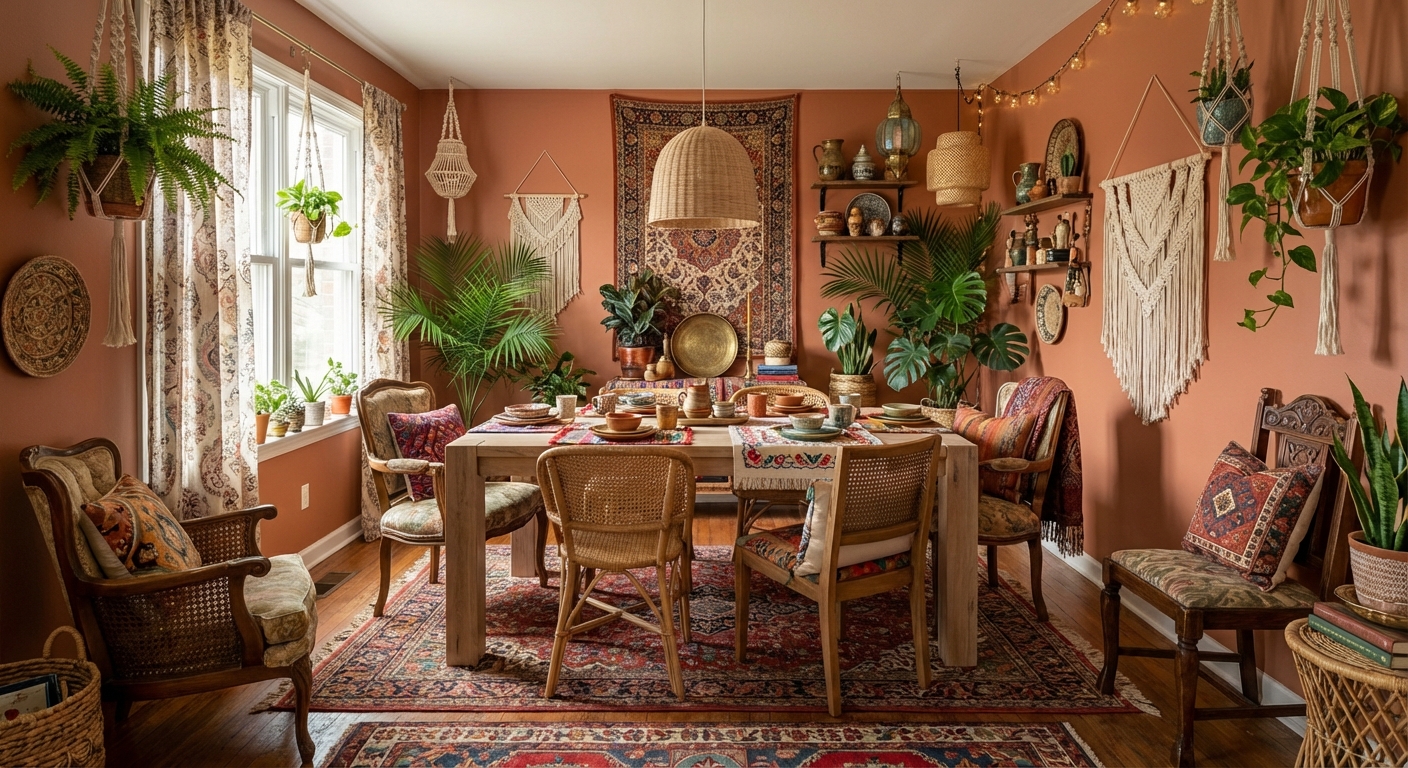
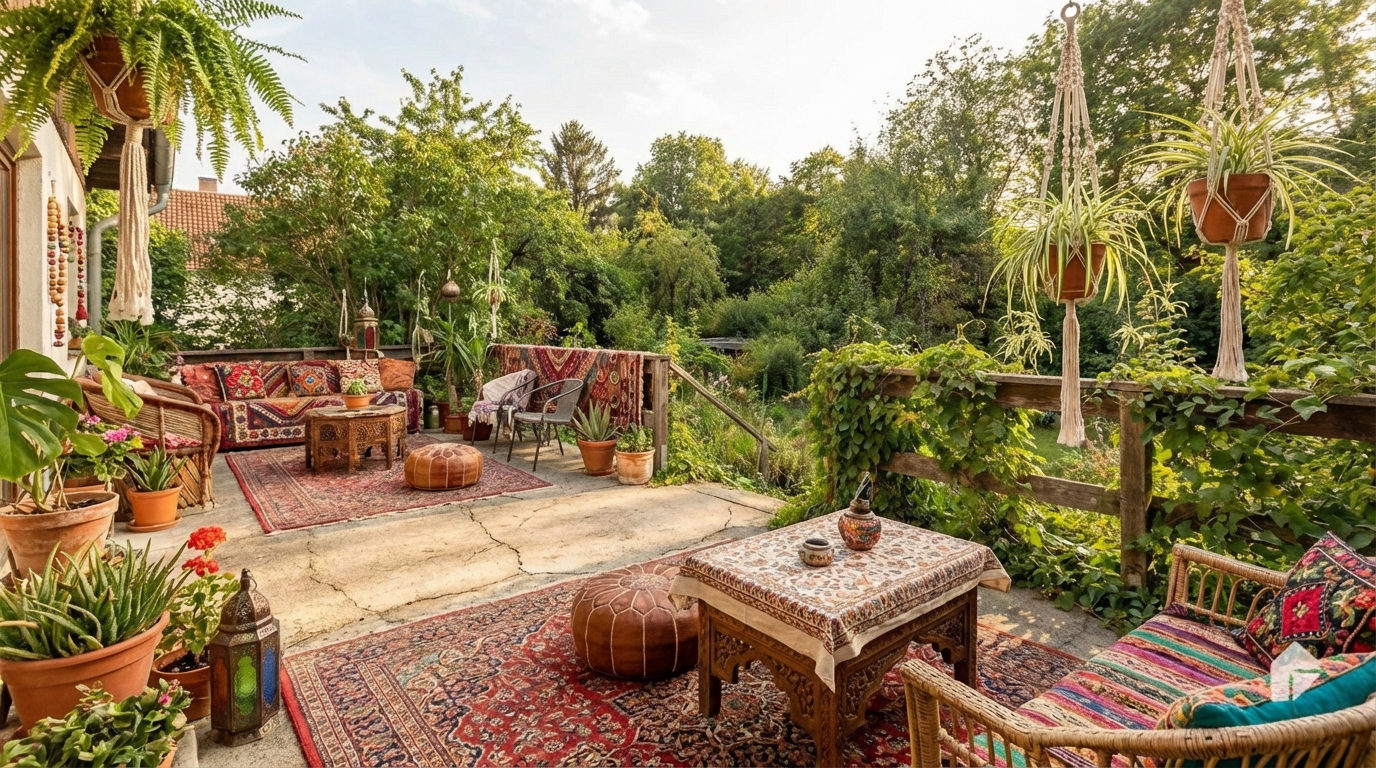
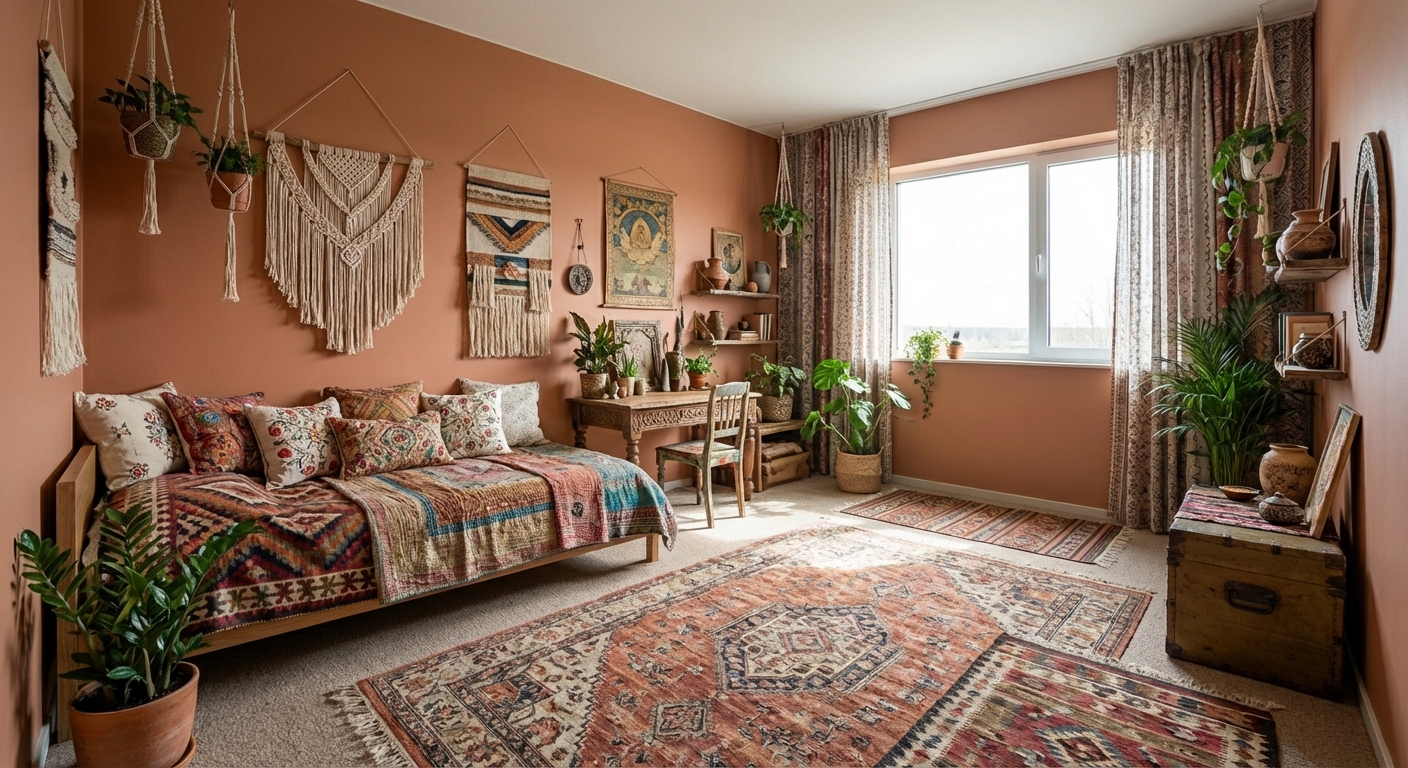
The foundation is warm neutrals — creamy whites, warm tans, and caramel tones — which provide a grounding base for the layering that defines the style. Build up from there with rich jewel tones (deep teal, magenta, saffron, burgundy) and earthy colors (terracotta, ochre, olive). The key technique is layering: layer rugs over rugs, pillows over throws, and textiles over furniture. Mix patterns boldly — ikat, suzani, kilim, paisley, and block print can coexist if they share a color thread. Materials should be global and handmade: Moroccan poufs, Indian block-print textiles, Turkish kilim rugs, macrame wall hangings, and rattan furniture. Plants are non-negotiable — bohemian spaces overflow with greenery in mismatched pots. Furniture can be low-slung and casual: floor cushions, daybeds, vintage armchairs with character. Lighting is warm and eclectic: lanterns, string lights, candles, and beaded or woven pendant fixtures. The critical skill is knowing when to stop — bohemian should feel abundant, not chaotic.
The secret to boho that looks curated instead of chaotic is picking one unifying color and weaving it through every layer.
Bohemian design is uniquely challenging because the line between curated eclecticism and visual chaos is thin. Intero AI lets you test bohemian layering in your actual room — see how adding a kilim rug, jewel-tone pillows, or a macrame wall hanging would look before you buy. Find your personal threshold between rich and overwhelming.
How They Compare
Try both styles with Intero AI — upload a photo and compare side by side
Frequently Asked Questions
Q1 How do I mix patterns in bohemian design without it looking messy?
Choose a unifying color thread — for example, if your rug has teal and terracotta, ensure those colors appear in your pillows and throws. Vary the scale of patterns: pair a large-scale ikat with a small geometric and a medium floral. Keep the base neutral to give patterns room to breathe.
Q2 What is the difference between bohemian and boho chic?
Traditional bohemian is heavier, darker, and more vintage-driven — think dark wood, tapestries, and antique furniture. Boho chic is a lighter, more modern interpretation: white walls, lighter textiles, more greenery, and a brighter overall palette. Both share the layering principle and global influences.
Q3 Can bohemian design work in small spaces?
Yes, but exercise restraint on quantity. In a small room, choose fewer layers but make them count: one statement rug, a few bold pillows, and one or two standout accessories. Use the vertical space — hanging plants, wall textiles, and tall shelving keep the floor clear while maintaining boho richness.
Q4 Where do I find authentic bohemian decor?
Vintage shops, flea markets, estate sales, and artisan marketplaces like Etsy are the best sources. International home goods stores and fair-trade retailers offer global textiles. The best bohemian spaces are built slowly, with pieces collected over time rather than purchased all at once.
Related searches
These are the next pages people usually open while narrowing this design direction.
Ready to See This Style in Your Room?
Download Intero and preview this design on your own room photo.
No credit card. No signup. Just results.
Scan to download
Point your phone camera at a code

