The Complete Guide to Coastal Interior Design
Authentic coastal design is not about seashells and anchors. It is about capturing the light, air, and relaxed ease of life near the water.
What is Complete Guide to Coastal Design?
Authentic coastal design is not about seashells and anchors. It is about capturing the light, air, and relaxed ease of life near the water.
2/4
See the Transformation
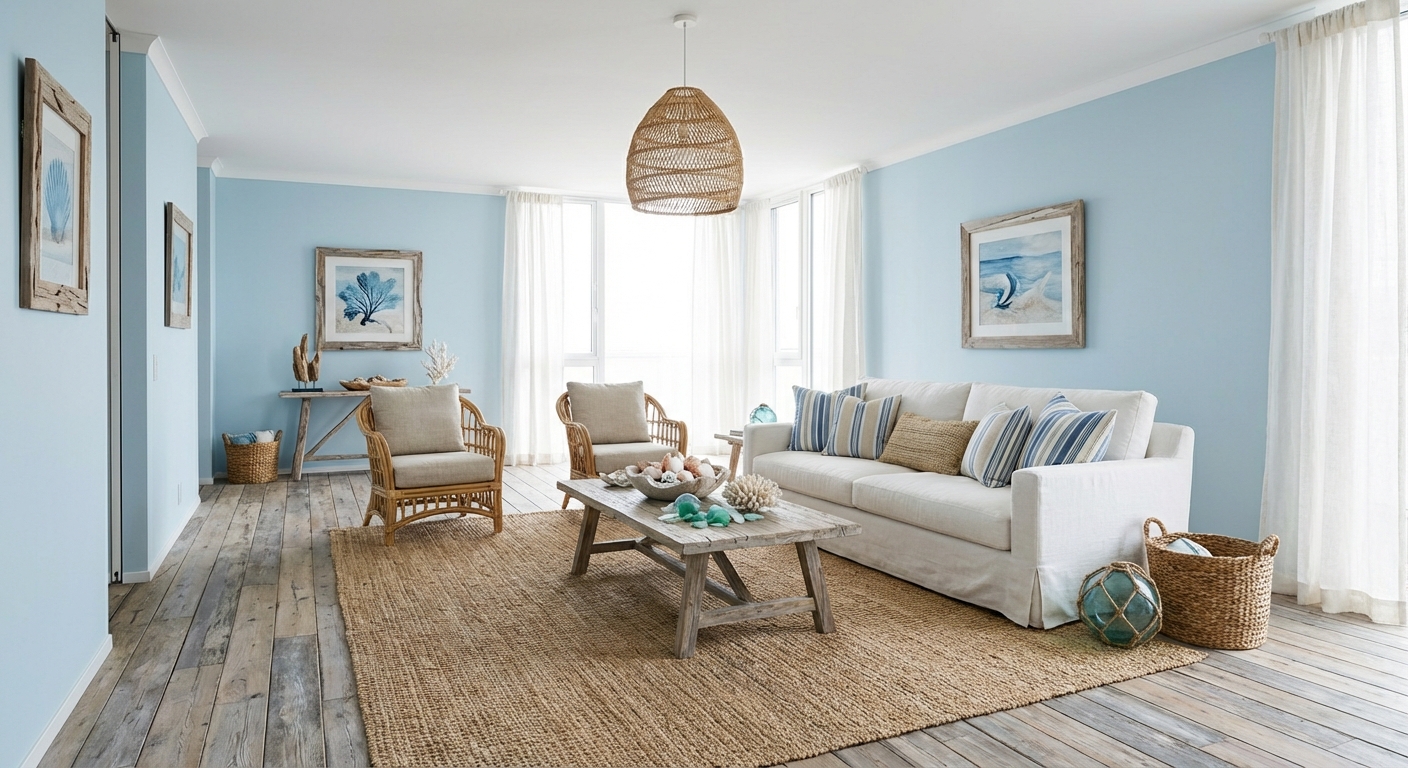
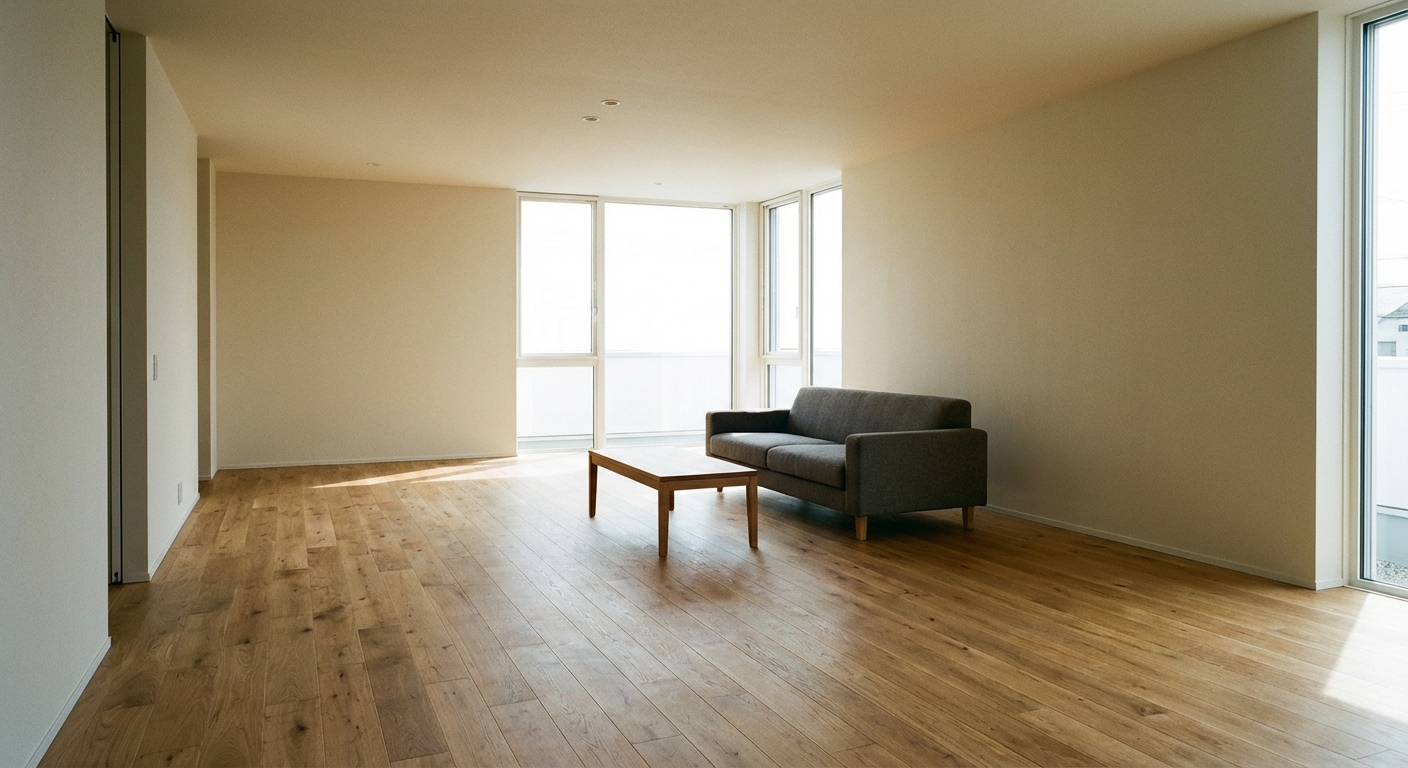
Upload your room photo in the app to see your real transformation
Color Palette
Click any color to copy hex code
Why It Works
Coastal design works because it replicates the sensory experience of being near the ocean — the abundance of natural light, the sound and sight of open space, and the tactile warmth of natural materials. The style evolved from the practical architecture of seaside homes: large windows to capture ocean views, light colors to reflect heat, durable materials that withstand salt air, and open floor plans that invite cross-ventilation. Beyond function, coastal design taps into a universal longing for relaxation and simplicity. Research consistently shows that blue and green tones — the dominant colors in coastal palettes — reduce stress and promote calm. Light-filled rooms with natural textures activate the same neurological pathways as time spent in nature. This is why coastal design works thousands of miles from any beach; it creates the emotional experience of a seaside home regardless of geography.
Best for
- people ready to test options on a real photo before buying
- anyone planning a real living room where conversation distance, TV glare, and traffic past the sofa matter more than Pinterest perfection
- projects already thinking about linen, curtains and needing a coherent layout
Skip if
- you will not address conversation distance and only want a filter look
- you need the room finished tomorrow with zero test fits
Common mistakes
The usual complete living room miss is shopping object-by-object with no envelope decision. Details like linen, curtains only work if the plan respects conversation distance, TV glare, and traffic past the sofa. Another miss: pushing every seat against the walls and calling the empty middle “open”.
Decide this first
fix the primary seating pair and one clear path before decorative chairs. Lock a coherent material story instead of random catalog picks as a short list, then use Intero on a real photo so scale and light are honest before you spend.
How to Achieve This Look
- 1
Paint walls white or soft blue to create a breezy backdrop
- 2
Choose furniture in weathered or whitewashed wood
- 3
Layer natural fiber rugs — jute, sisal, or seagrass
- 4
Use slipcovers in white or blue-striped performance fabric
- 5
Add woven baskets for textural storage
- 6
Keep window treatments sheer or use bamboo shades
Layout & materials
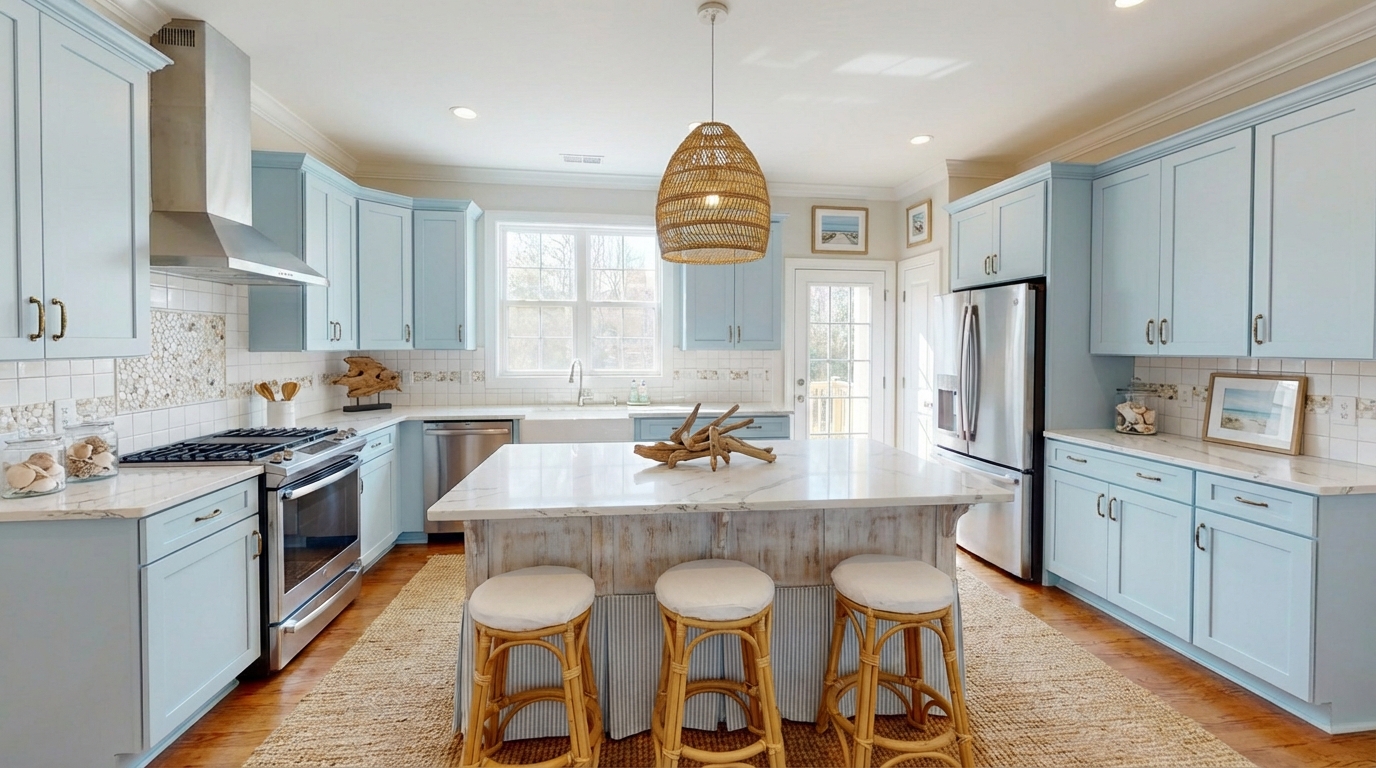
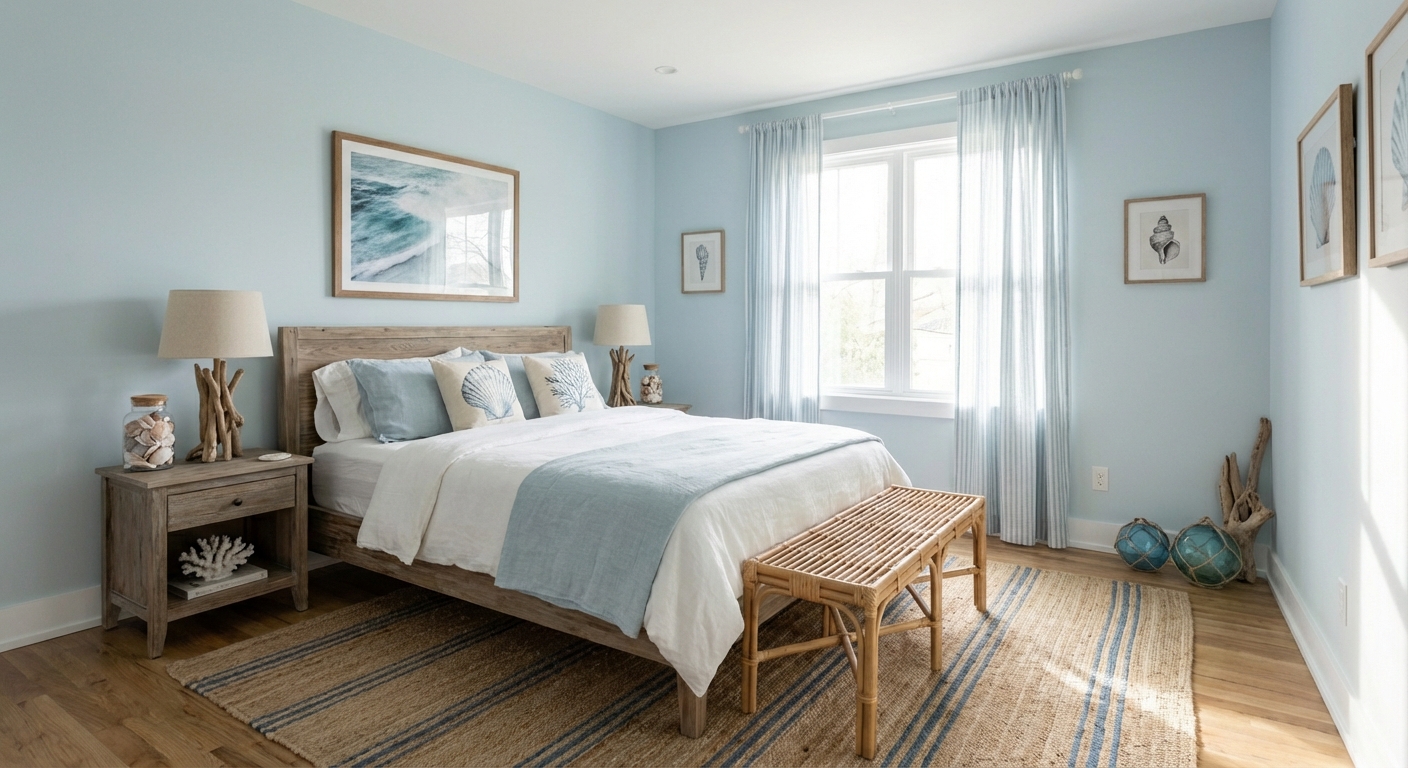
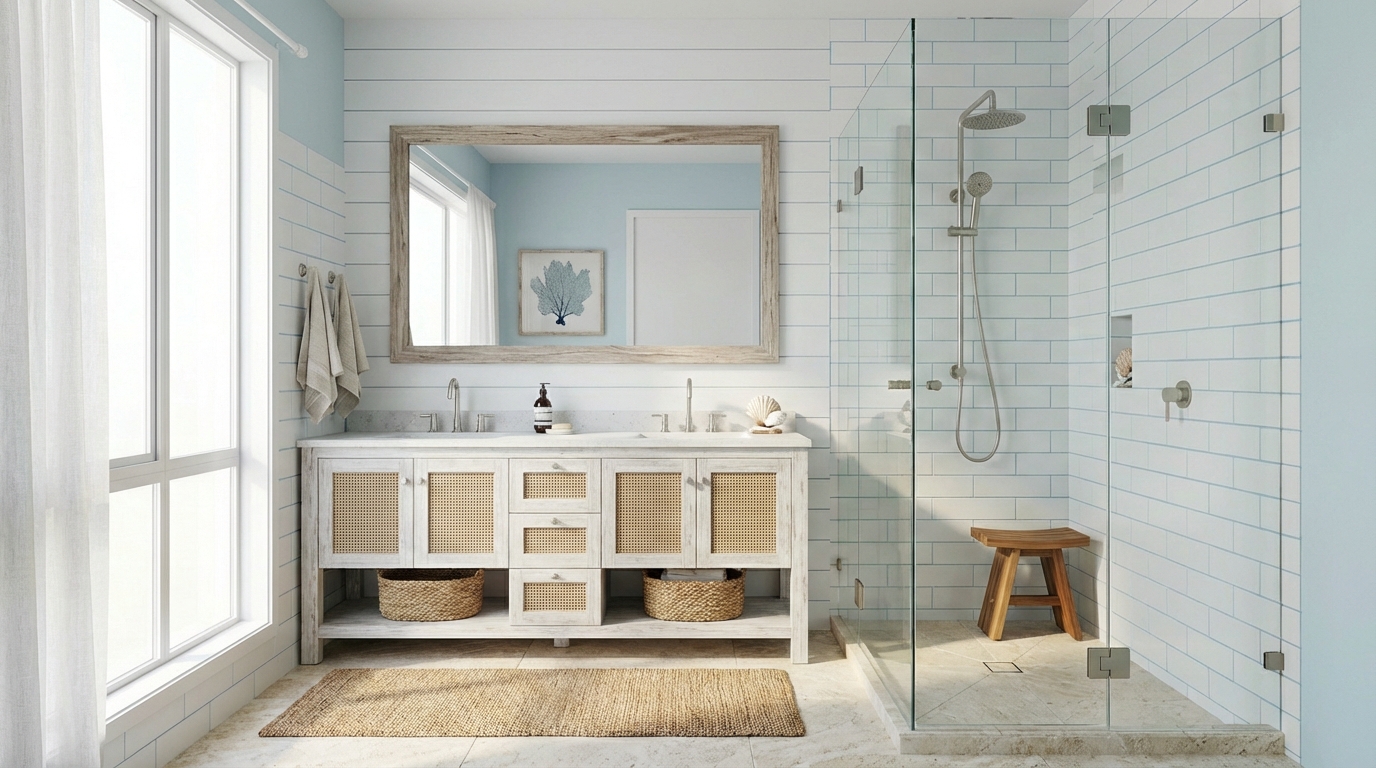
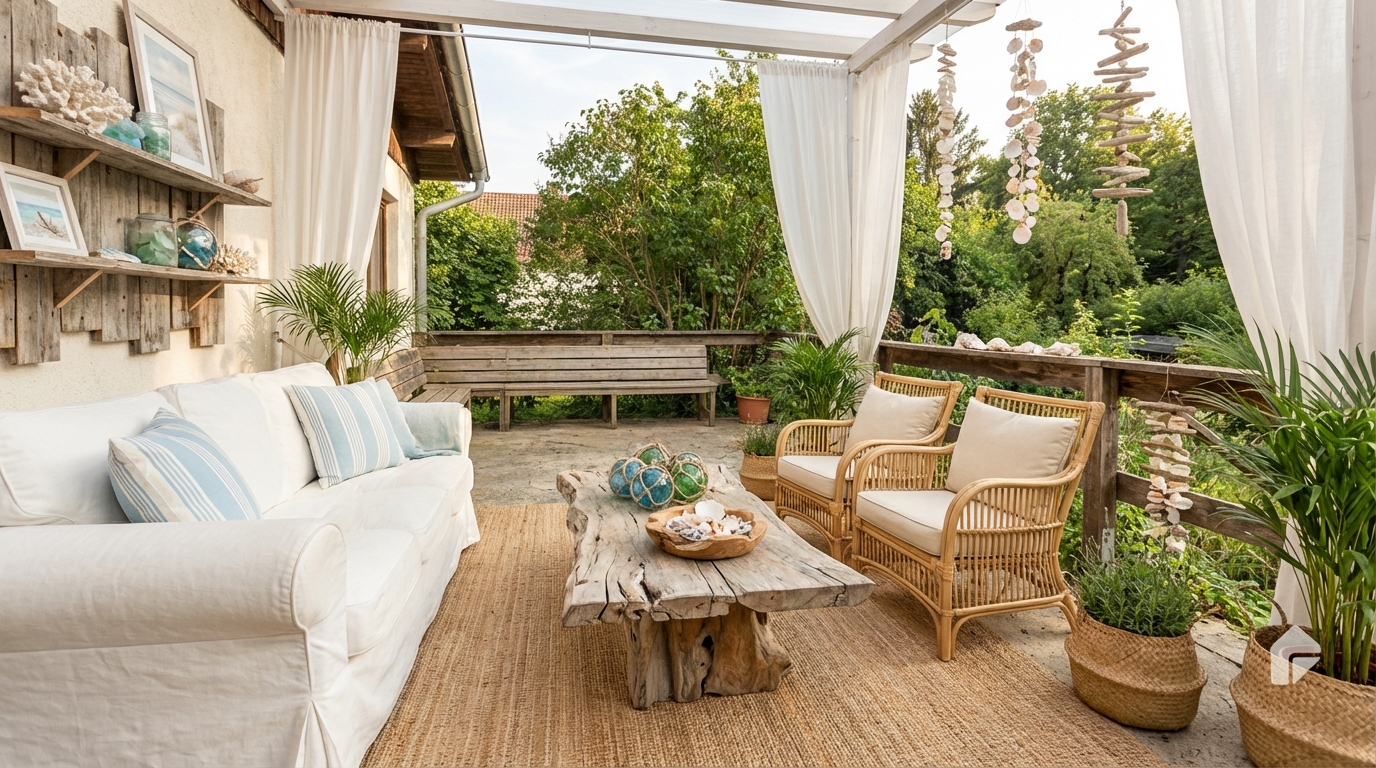
The color palette draws directly from the coast: crisp whites and sandy neutrals as the foundation, with ocean blues, sea glass greens, and driftwood grays as accents. Avoid primary blue — the coastal palette leans toward softer, grayed-down blues that mimic the real ocean. Materials should be natural, tactile, and resilient: whitewashed or bleached wood, rattan, sisal, jute, linen, and cotton. Furniture is relaxed and low-slung: slipcovered sofas in white or natural linen, rattan accent chairs, and weathered wood tables. Key elements include sheer curtains that billow with airflow, woven light fixtures, natural fiber rugs, and organic accessories — driftwood, coral, sea glass, and pottery in ocean tones. Modern coastal avoids the themed trap of anchors, life preservers, and nautical stripes. Instead, it captures the essence through texture, light, and color. Let the materials reference the coast, not the decorations.
Skip the seashell decor — real coastal style comes from materials like jute, driftwood, and linen, not themed accessories.
Intero AI helps you find the line between authentic coastal design and themed cliche. Upload your room photo and experiment with ocean-inspired palettes, natural textures, and light-filled arrangements. See how whitewashed wood, linen upholstery, and soft blues would transform your space into a coastal retreat — no matter how far you live from the shore.
How They Compare
Try both styles with Intero AI — upload a photo and compare side by side
Frequently Asked Questions
Q1 Can I achieve coastal design without it looking like a beach theme?
Yes — the key is focusing on texture, light, and color rather than themed decor. Skip the seashells, anchors, and nautical stripes. Instead, use natural materials (rattan, linen, bleached wood), a soft blue-green-white palette, and let abundant natural light do the heavy lifting.
Q2 What colors define authentic coastal design?
Soft whites and sandy neutrals form the base. Accent colors are drawn from the ocean: muted blues, sea glass green, seafoam, and driftwood gray. Avoid bright primary blue or turquoise — real coastal palettes are softer and more grayed-down than most people expect.
Q3 Does coastal design work in landlocked homes?
Absolutely. Coastal design is about light, air, and natural materials — not geography. Maximize natural light, use a light neutral palette with soft blue accents, and incorporate natural textures. The feeling of coastal calm translates to any location.
Q4 What is the difference between coastal and nautical?
Nautical is a subset focused on maritime themes — navy and white stripes, anchors, rope, brass hardware. Coastal is broader and more subtle, inspired by the natural coastal environment rather than maritime culture. Modern coastal design avoids nautical motifs entirely.
Related searches
These are the next pages people usually open while narrowing this design direction.
Ready to See This Style in Your Room?
Download Intero and preview this design on your own room photo.
No credit card. No signup. Just results.
Scan to download
Point your phone camera at a code

