Bathroom Design Ideas for Small and Luxurious Spaces
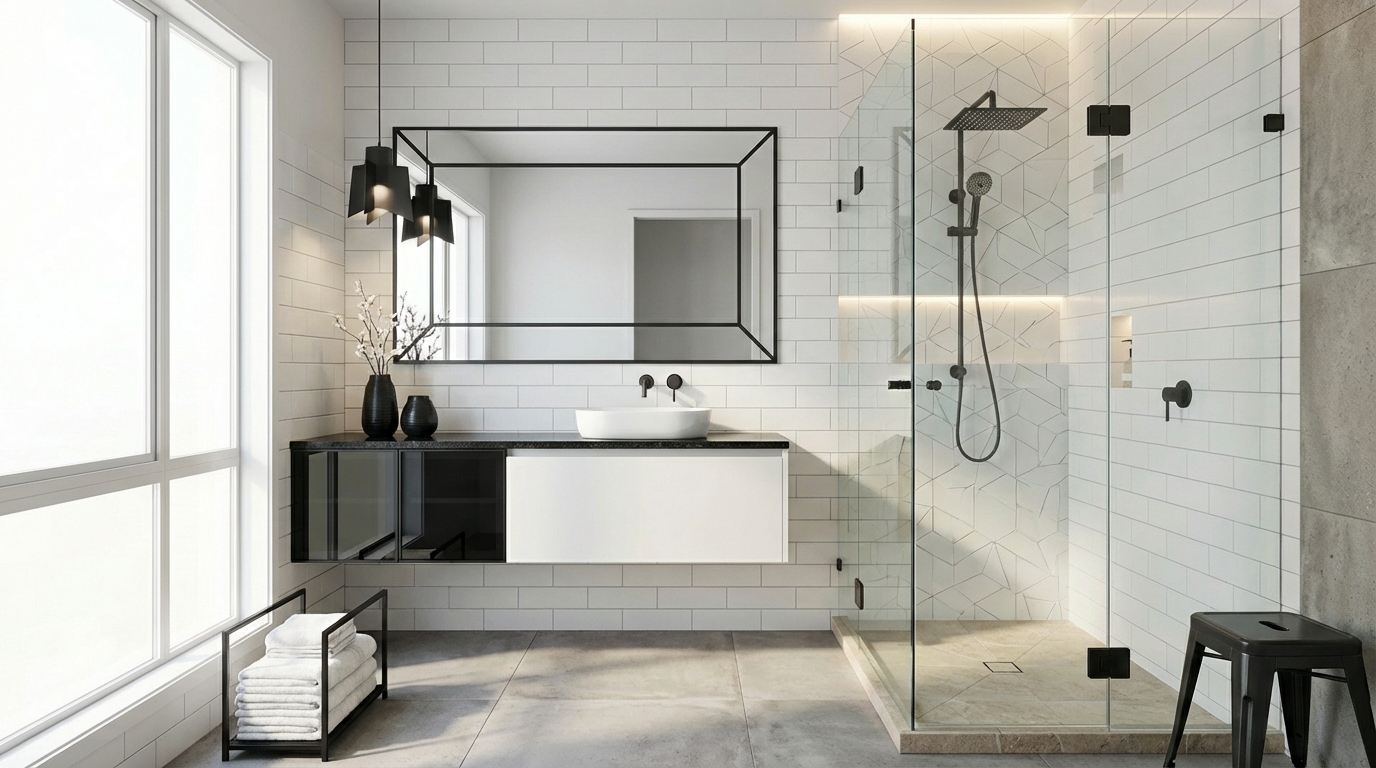
Bathrooms punish visual noise. Every material shows up in a small footprint — most are between 40 and 100 square feet — so too many finishes read chaotic fast. Good bathroom design is about restraint: a tight palette, a single accent, and lighting that actually works at the mirror. The rooms that succeed pick one hero element (a stone slab, a hand-made tile, a double vanity with statement stone) and let the rest fall in line. Tile choice has the biggest long-term visual impact: large-format porcelain (24x48 or larger) makes small rooms feel bigger because it reduces grout lines, while smaller tiles like zellige or 2-inch hex add texture but need a calm floor or wall to balance them. Ventilation-friendly materials matter too — porcelain, natural stone, and high-quality painted MDF hold up in the moisture cycle, while unsealed woods and low-grade laminates do not. Lighting should hit the face, not the top of the head: wall sconces flanking the mirror beat any overhead fixture for daily use.
Pick two tiles max for small bathrooms, three for large. Let one material carry the room and use the others as punctuation.
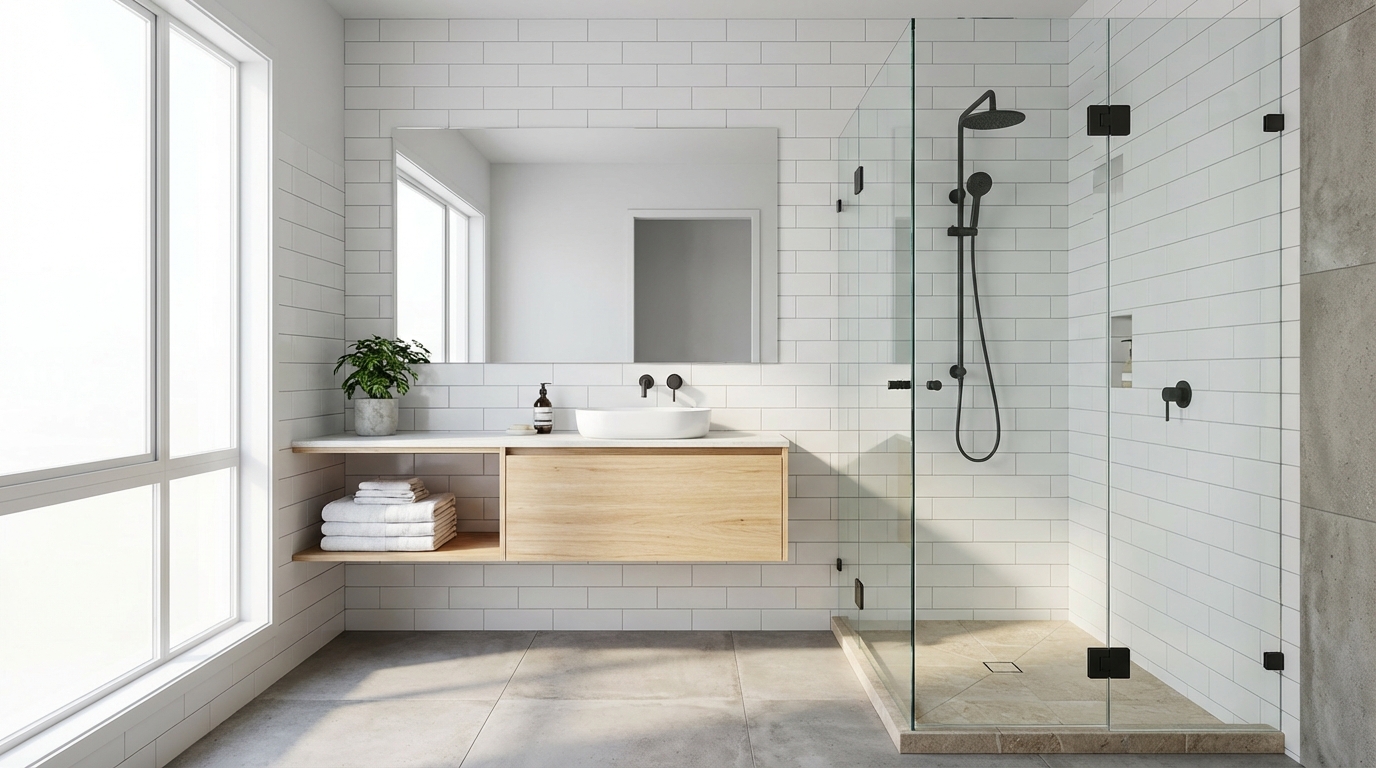
Key elements of a well-designed bathroom
- Tile palette
- Vanity style
- Mirror and lighting
- Hardware finish
- Storage
- Ventilation-friendly materials
Most common bathroom mistakes
- Three accent tiles competing at once
- Overhead light only, unusable at the mirror
- Mismatched metal finishes across fixtures
- Dark room with no reflective surfaces
Bathroom ideas by style
Pick the direction that fits before narrowing into a single design.
Modern · bathroom
See all modern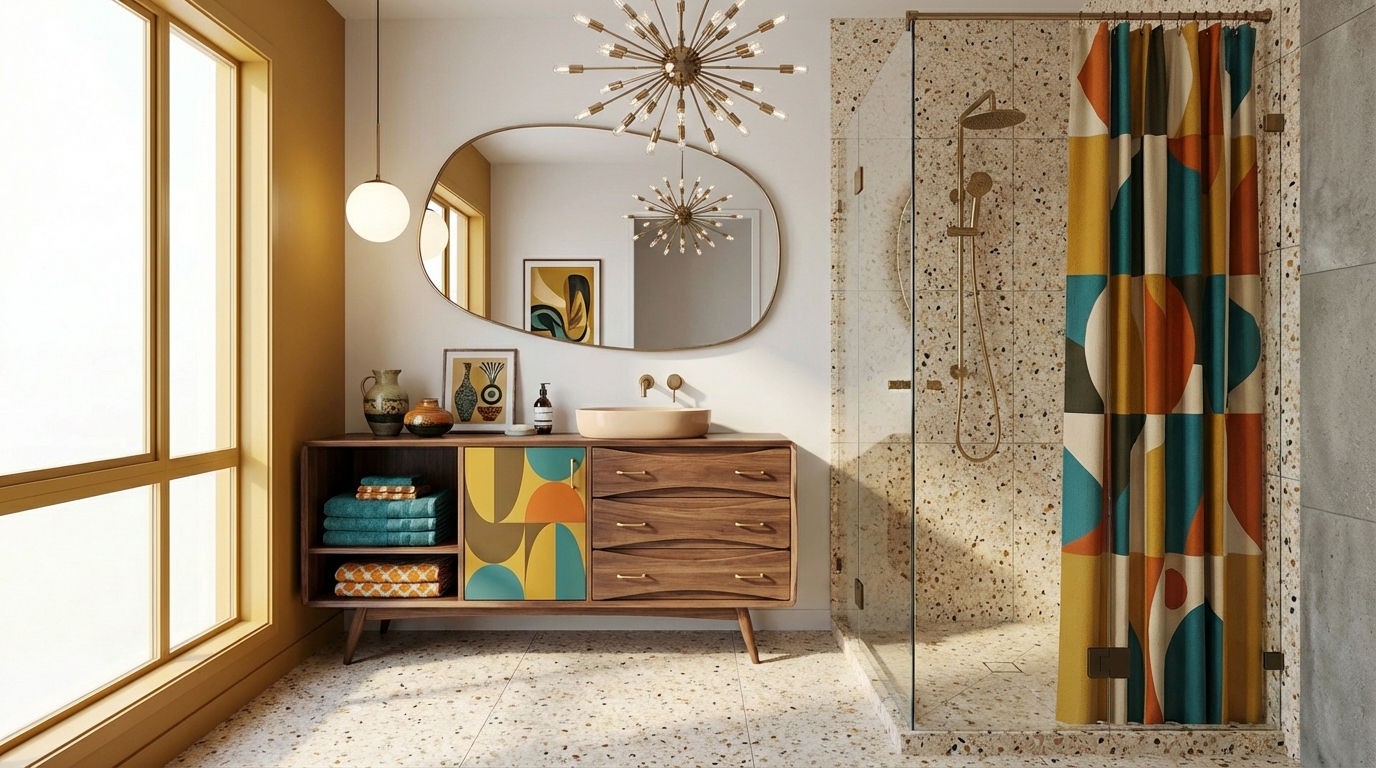
Minimalist · bathroom
See all minimalist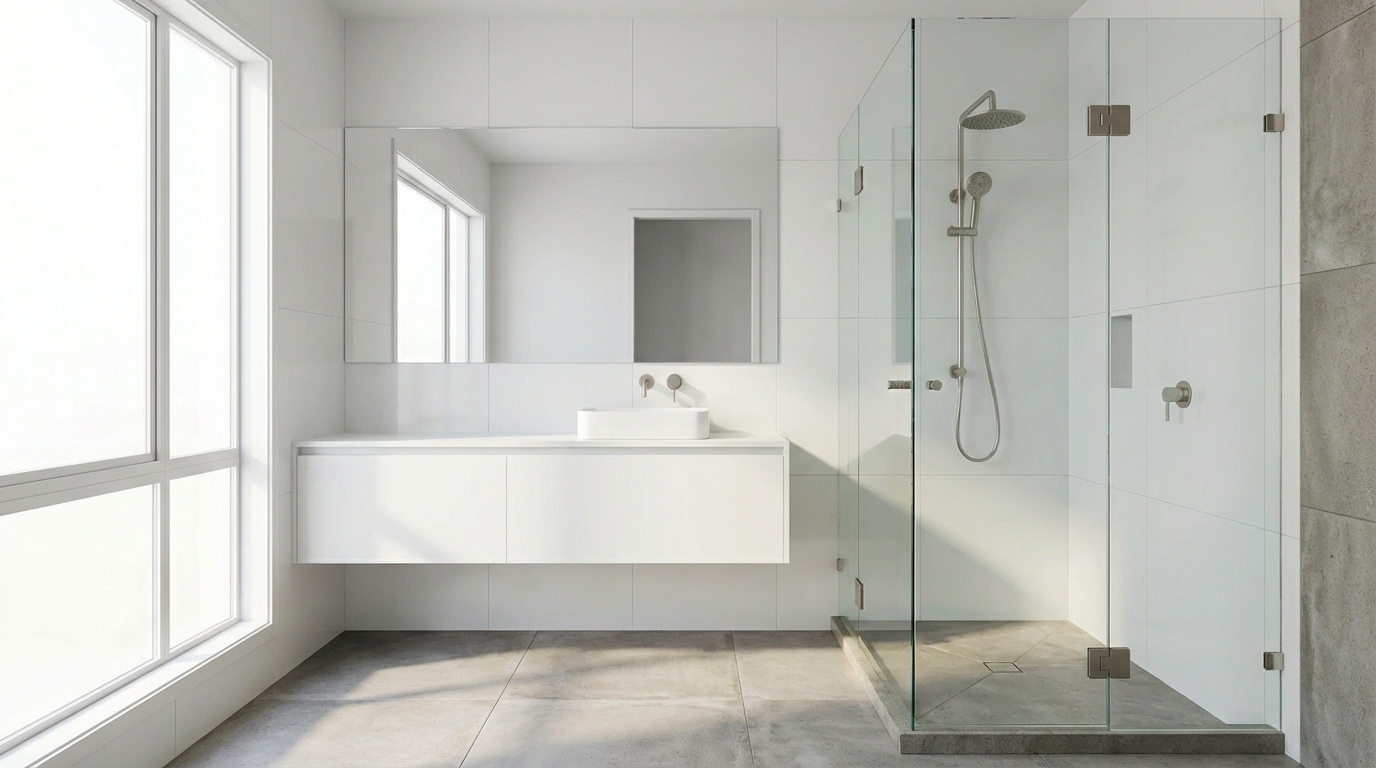
Scandinavian · bathroom
See all scandinavian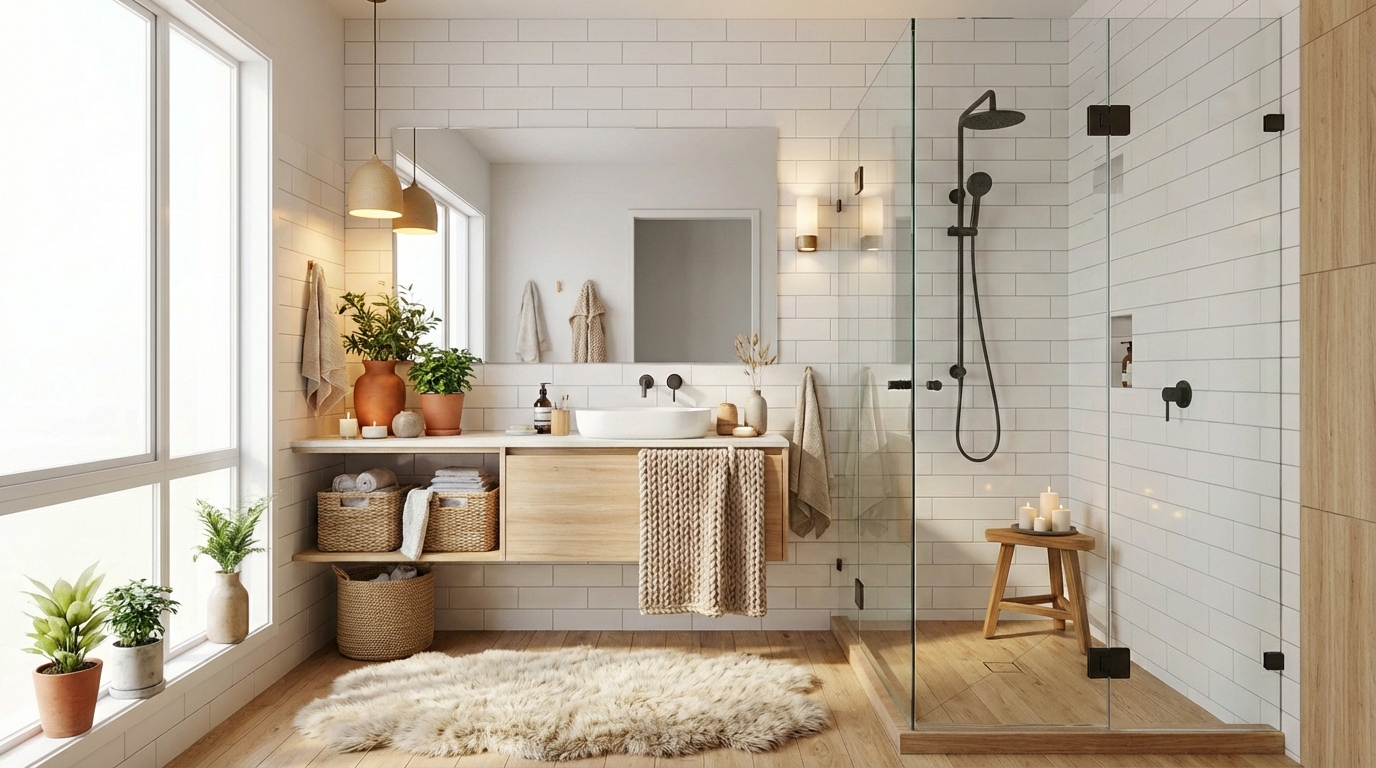
Industrial · bathroom
See all industrial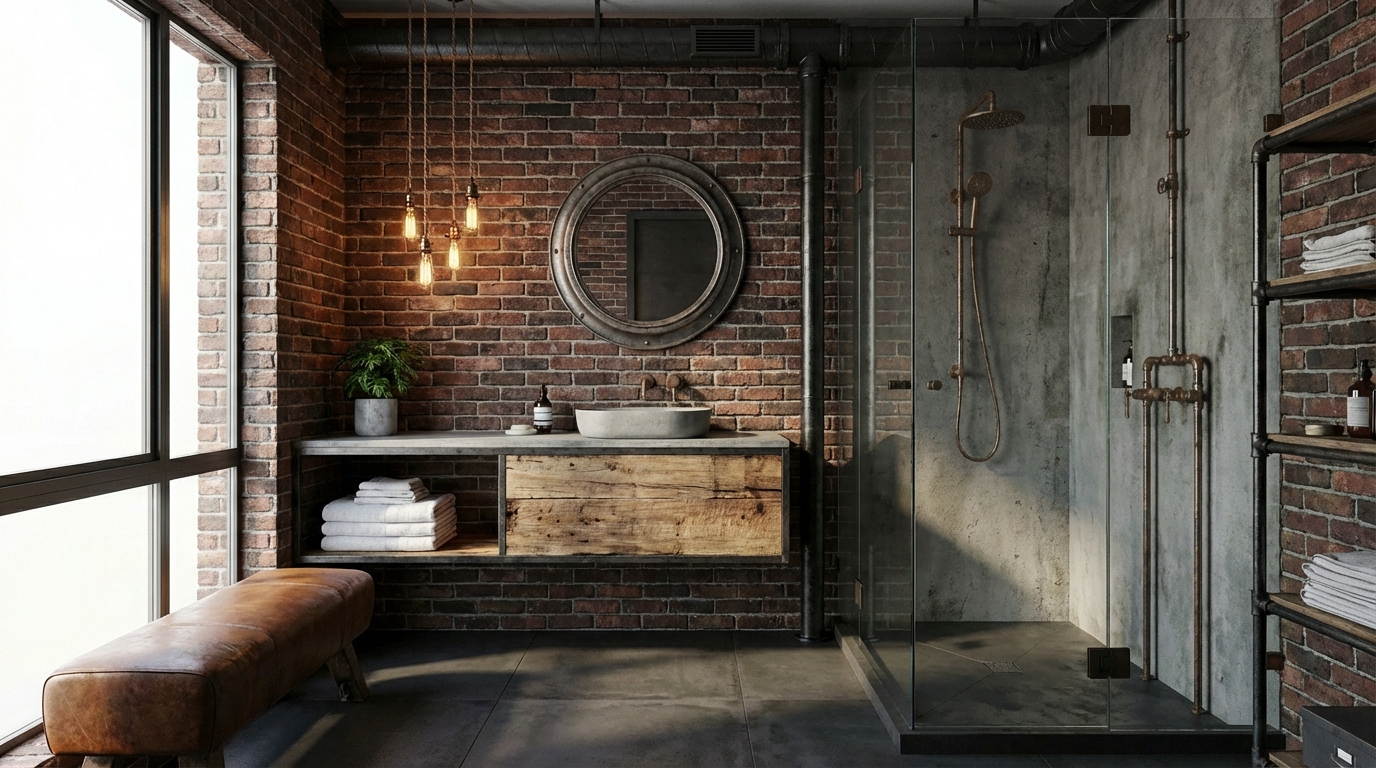
Japandi · bathroom
See all japandi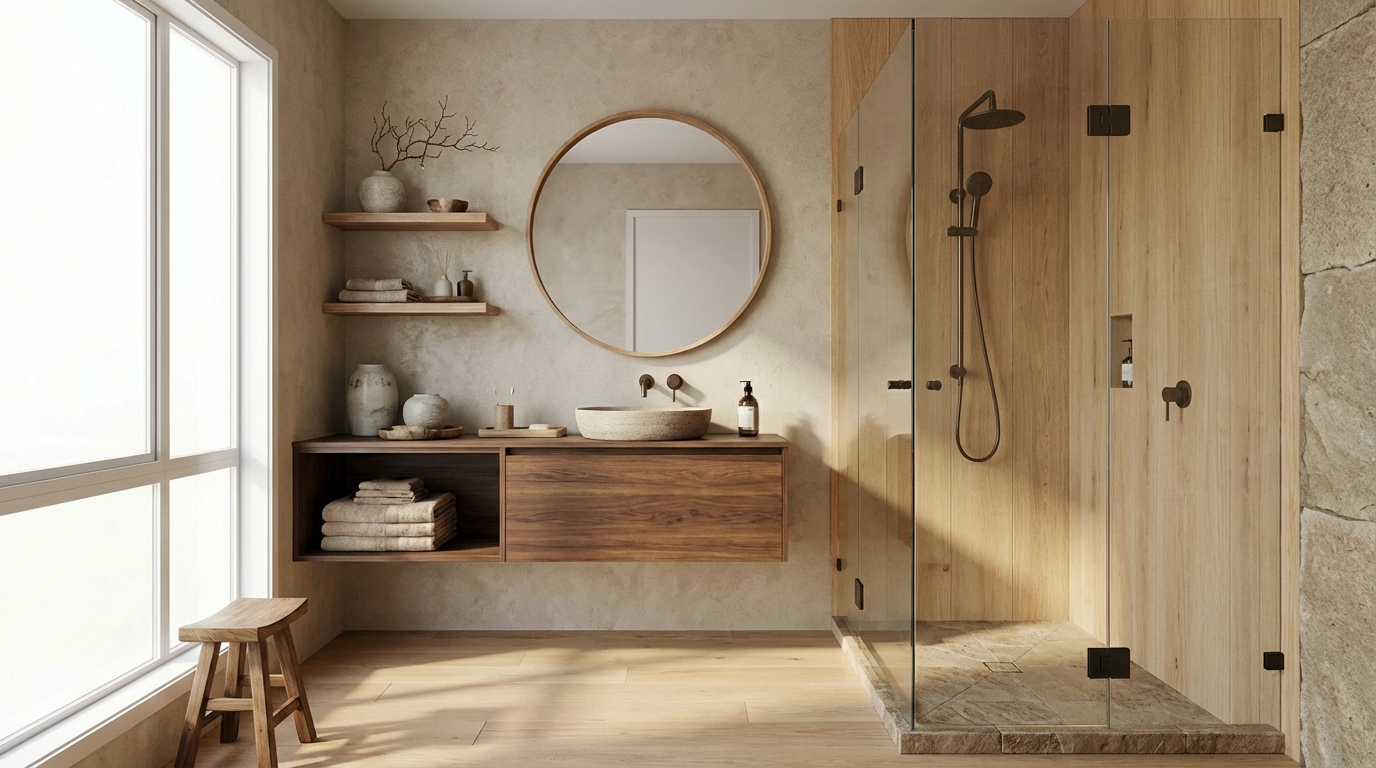
Coastal · bathroom
See all coastal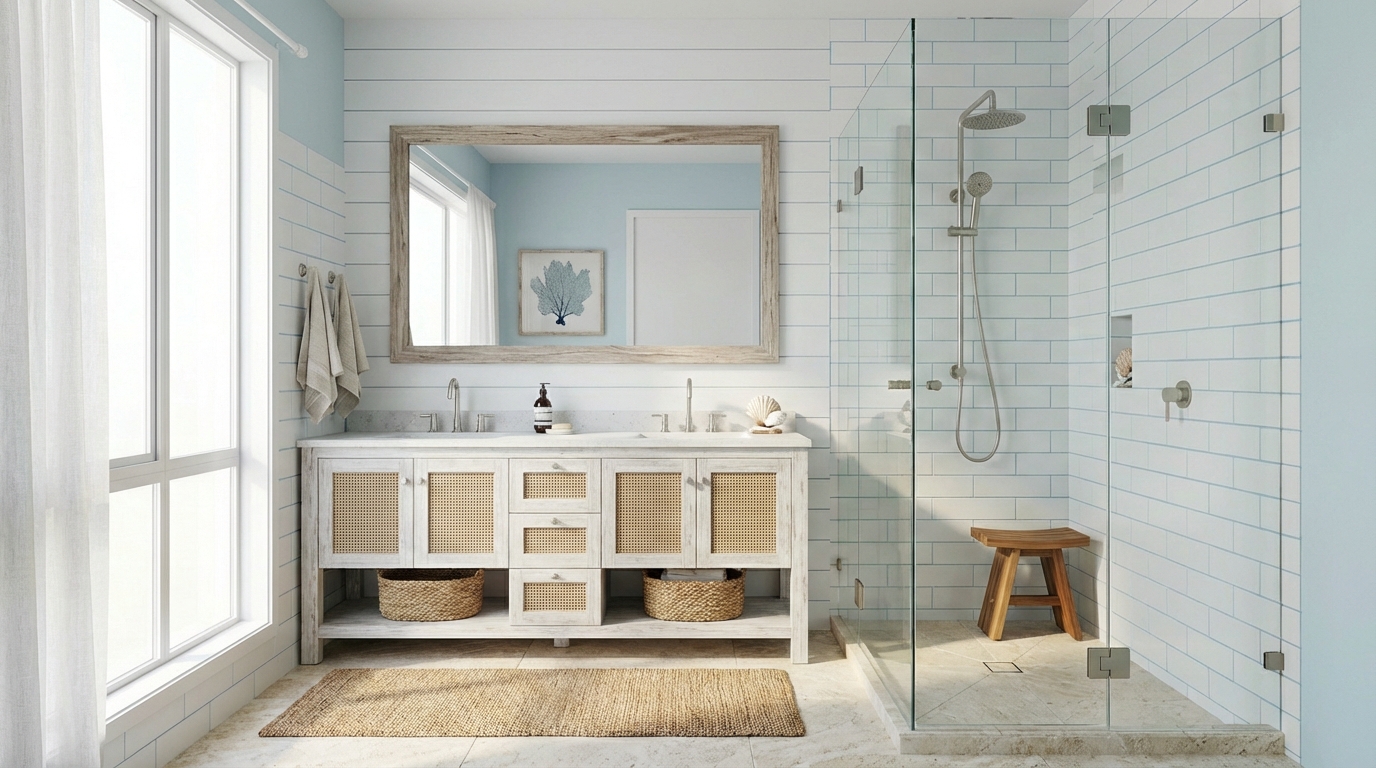
Bohemian · bathroom
See all bohemian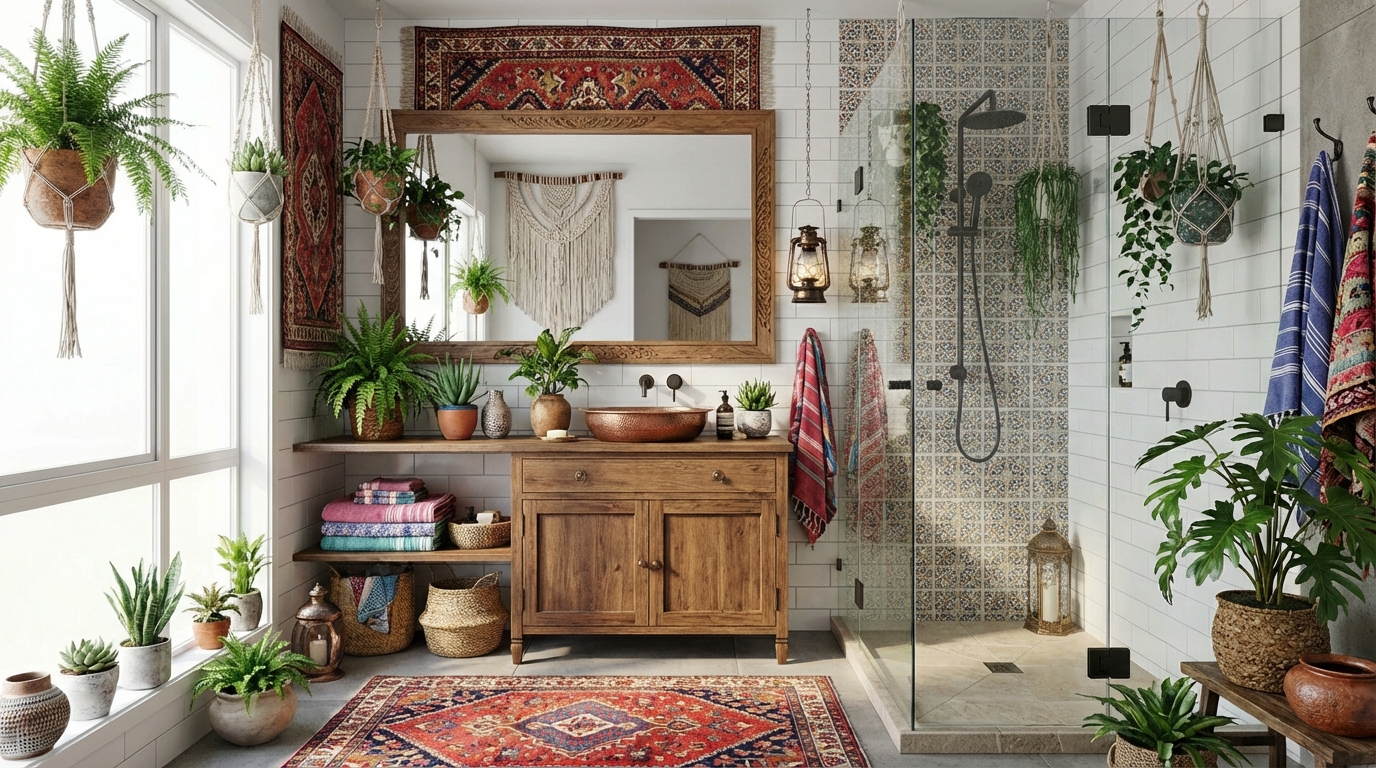
Farmhouse · bathroom
See all farmhouse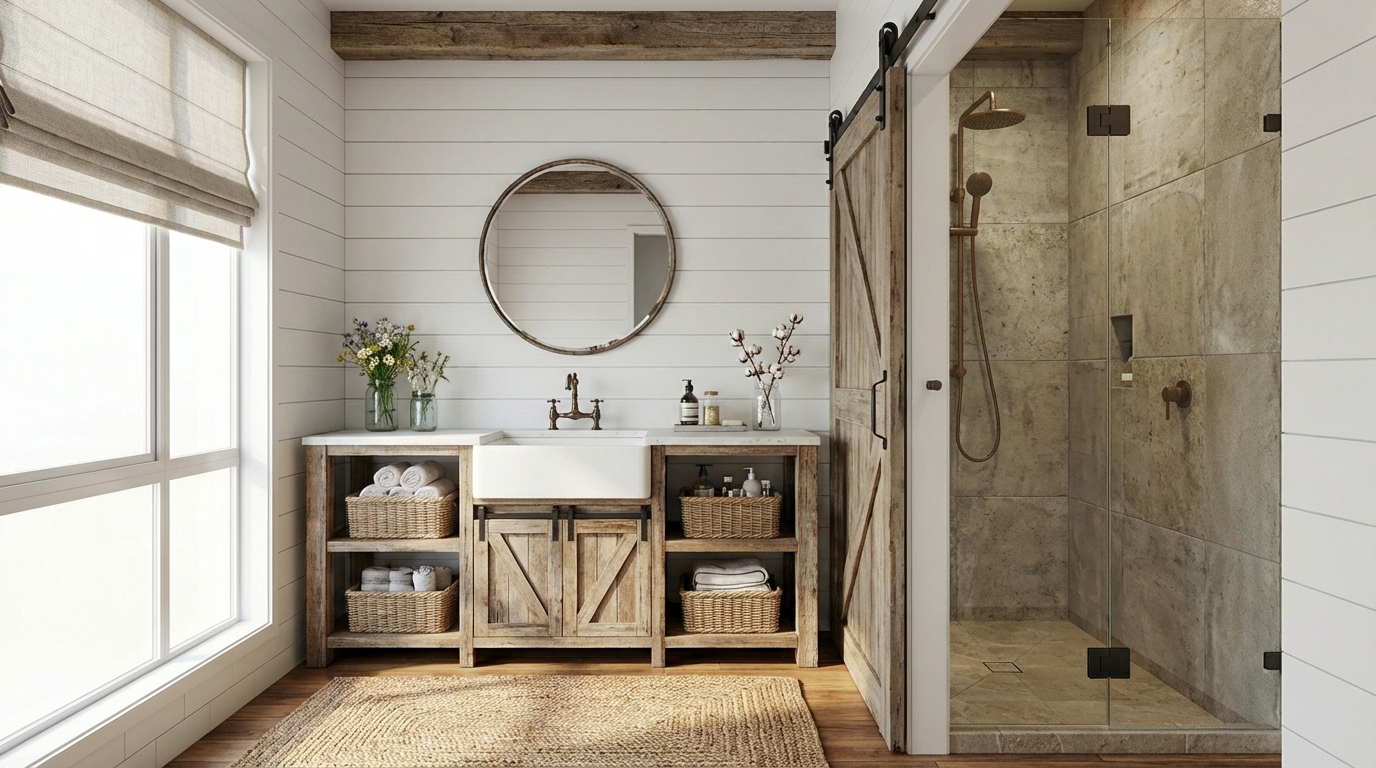
Contemporary · bathroom
See all contemporaryMore bathroom ideas
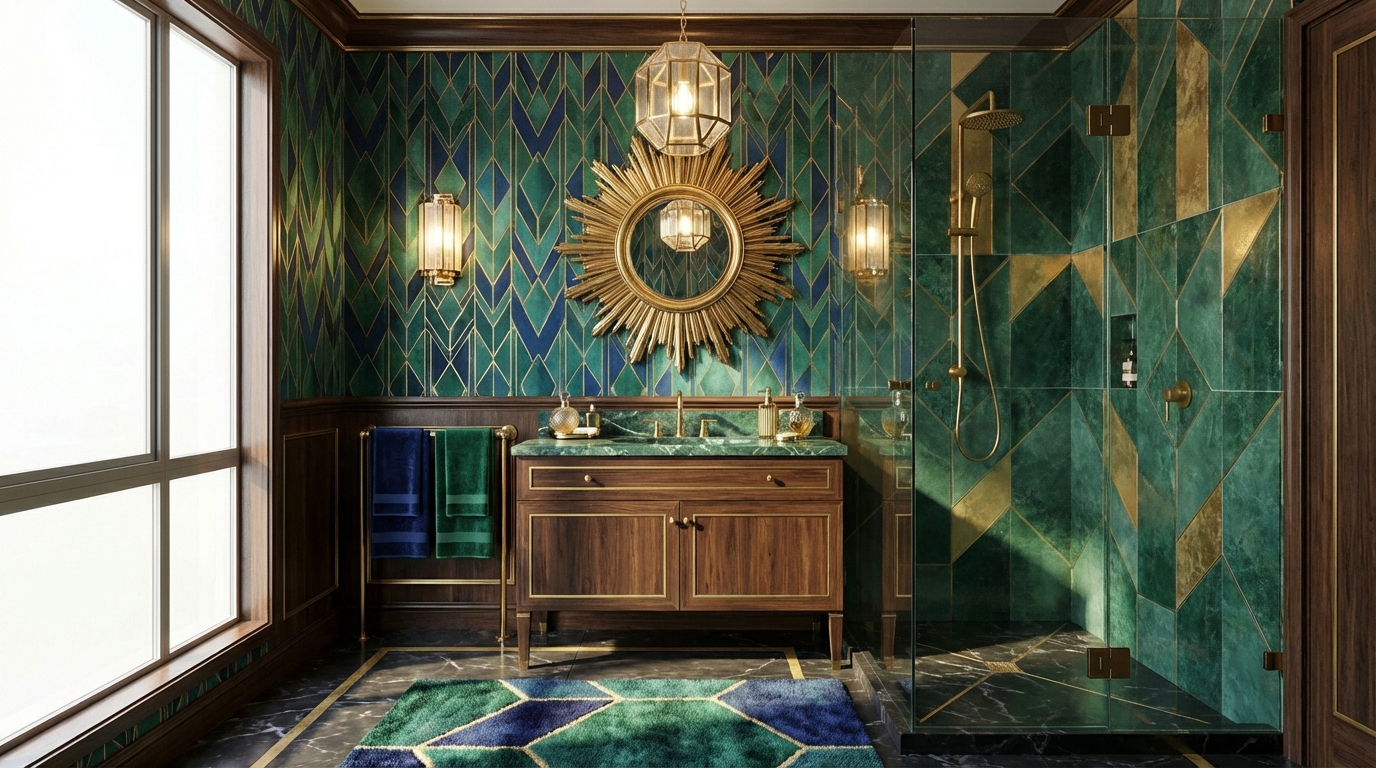
Art Deco Bathroom Design Ideas
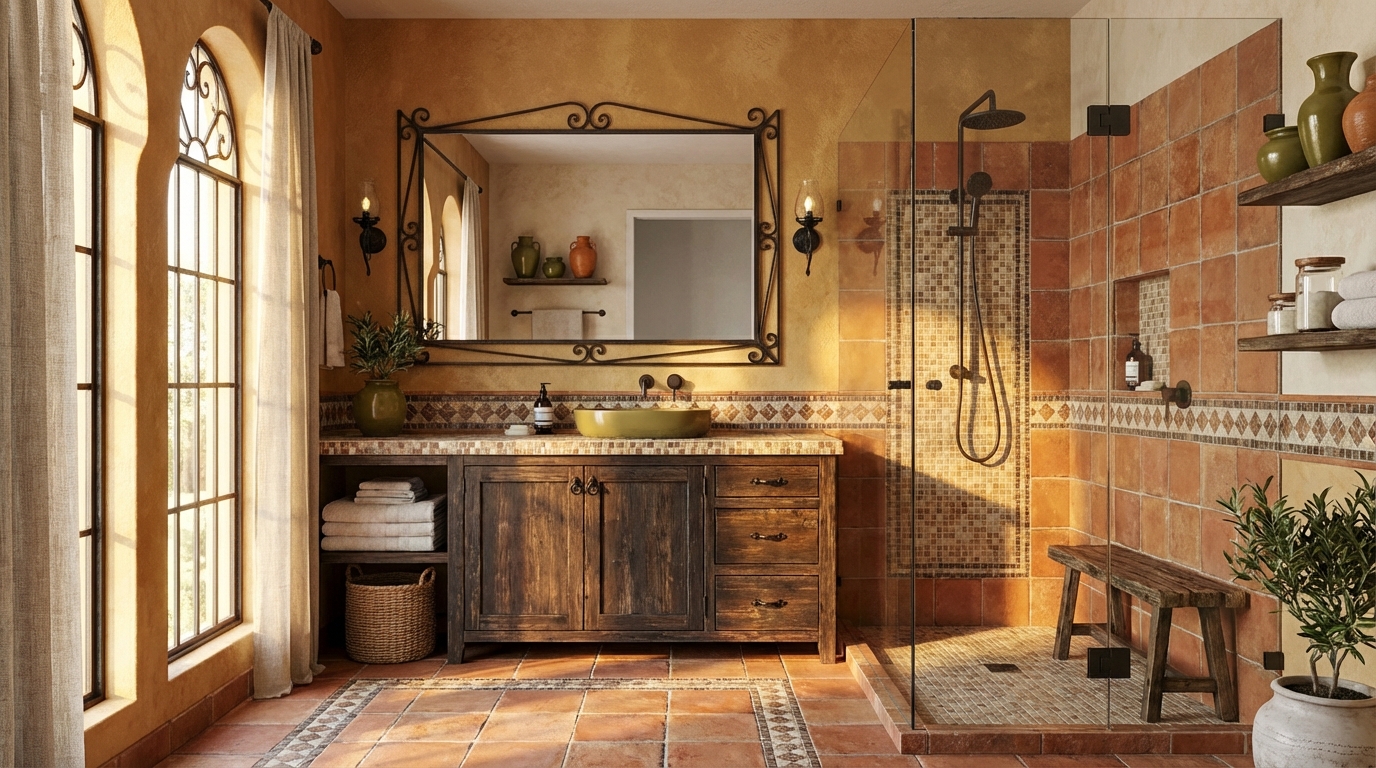
Mediterranean Bathroom Design Ideas
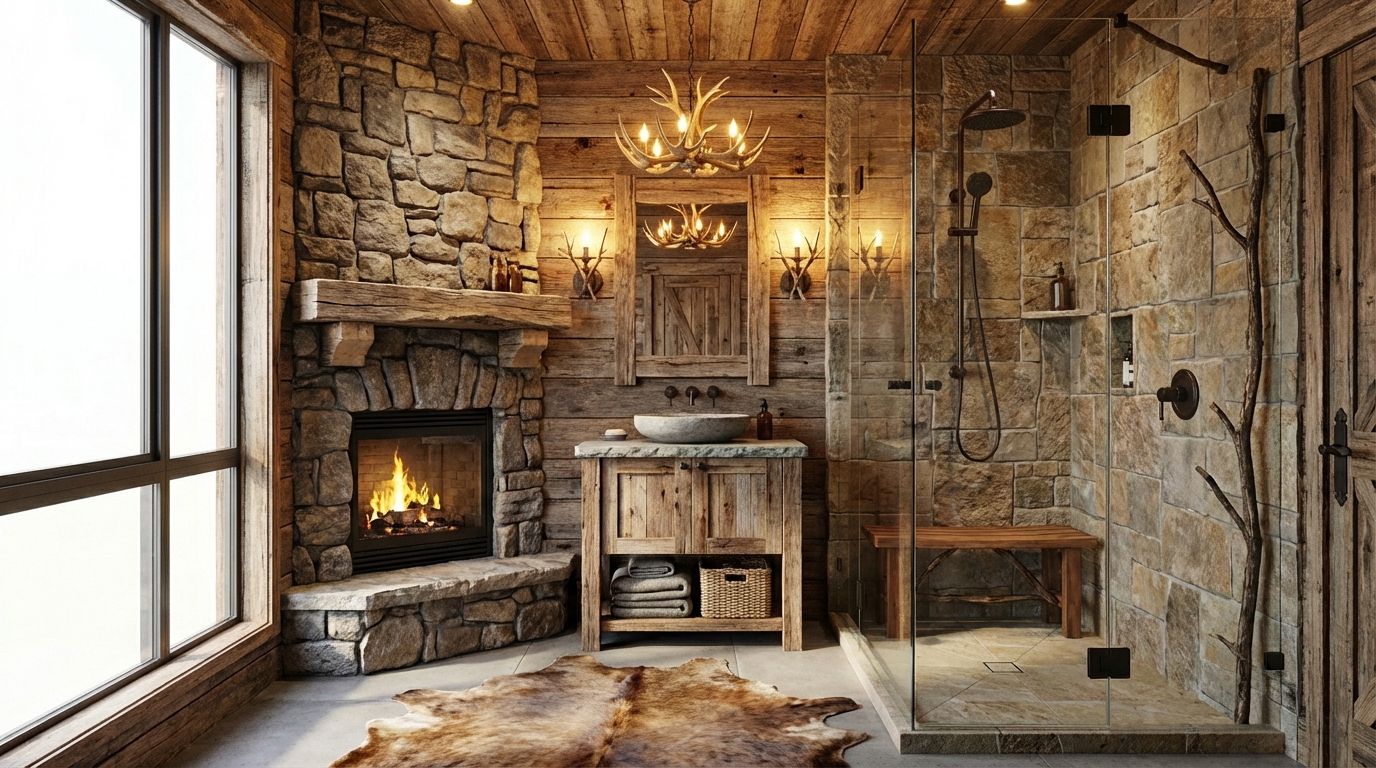
Rustic Bathroom Design Ideas
Transitional Bathroom Design Ideas
Wabi-Sabi Bathroom Design Ideas
French Country Bathroom Design Ideas
Maximalist Bathroom Design Ideas
Hollywood Regency Bathroom Design Ideas
Cottagecore Bathroom Design Ideas
Biophilic Bathroom Design Ideas
Tropical Bathroom Design Ideas
Eclectic Bathroom Design Ideas
Preview your own bathroom with AI
Upload a photo of your bathroom, pick a style, and compare directions before buying furniture or committing to paint. Every hub on this page is a shortcut into testing the idea on your actual space.
Quick answers about bathroom design
Pair this hub with related style directions, visual tools, and room guides.
Frequently Asked Questions
Q1 How do I make a small bathroom feel bigger?
Reduce visual breaks — floor-to-ceiling tile in one tone, a large-format mirror (at least as wide as the vanity), a wall-hung vanity that exposes floor underneath, and better lighting. Less pattern and more reflection almost always reads larger than any single "space-saving" piece of furniture.
Q2 Can bathrooms use dark colors?
Yes, but you need enough reflective surface and strong mirror lighting. Dark rooms (Farrow & Ball Railings, Hague Blue, Studio Green) work best with a polished stone counter, a large mirror, and sconce lighting rated at least 3000K at the face.
Q3 Should all metal finishes match?
In a small bathroom, yes — pick one family (unlacquered brass, matte black, polished nickel, or aged bronze). In larger bathrooms you can mix two intentionally (matte black plumbing with brass lighting, for example) if the split is consistent and there are at least three pieces of each metal so the mix reads intentional.
Q4 What tile works for shower floors?
Small-format tile (1-2 inch mosaics or 2-inch hex) gives the grout density needed for non-slip performance and curve-to-drain. Larger tiles can work if they are rated for wet areas and the pitch is set correctly, but mosaic is the safe default.
Q5 Can AI help with a bathroom remodel?
Yes — it is especially useful for tile, vanity, and color validation before the renovation budget is locked.
Preview bathroom ideas on your real space
Upload a photo in the free visualizer and preview the look before you buy paint, furniture, or a renovation.