Bohemian Design That Does Not Look Like a Dorm Room
Bohemian design is defined by layering — textiles, patterns, plants, and objects collected over time — but the rooms that actually read composed start with a structural base: a limited palette, one or two hero materials, and a point of visual rest. Without that discipline, boho slides quickly into clutter or into a specific dated look (fringed macramé everything, piled throw pillows, mandala tapestries) that ages badly. The current direction of bohemian owes more to Moroccan, Turkish, and North African interiors than to 1970s hippie references — earthier palettes, more discipline, fewer literal global-bazaar stickers. A disciplined boho room uses a warm neutral base (cream, warm white, or soft clay walls; natural oak or warm terracotta tile floor), layers a vintage rug with genuine depth (Turkish, Persian, Moroccan wool or a quality reproduction), and repeats one or two accent colors in textiles (rust, ochre, muted mustard, dusty sage, deep cream). Plants function as sculpture — one large statement (fiddle leaf fig, monstera, olive tree) anchors the room more than five small ones scattered around. Woven baskets, handmade ceramics, and vintage wooden objects add texture without pattern overload.
Key elements of bohemian style
- Layered textiles and rugs
- Warm, earthy palette
- Global patterns used sparingly
- Plants as sculpture
- Vintage or handmade accents
- One calm surface per room
Signature palette
Bohemian rooms usually pull from a tight palette. Start with these and introduce bolder accents only once the base works in your lighting.
Popular rooms for this style:
Bohemian ideas by room
Narrow a style direction to the room you are actually redesigning.
Living Room · bohemian
All living room ideasBedroom · bohemian
All bedroom ideas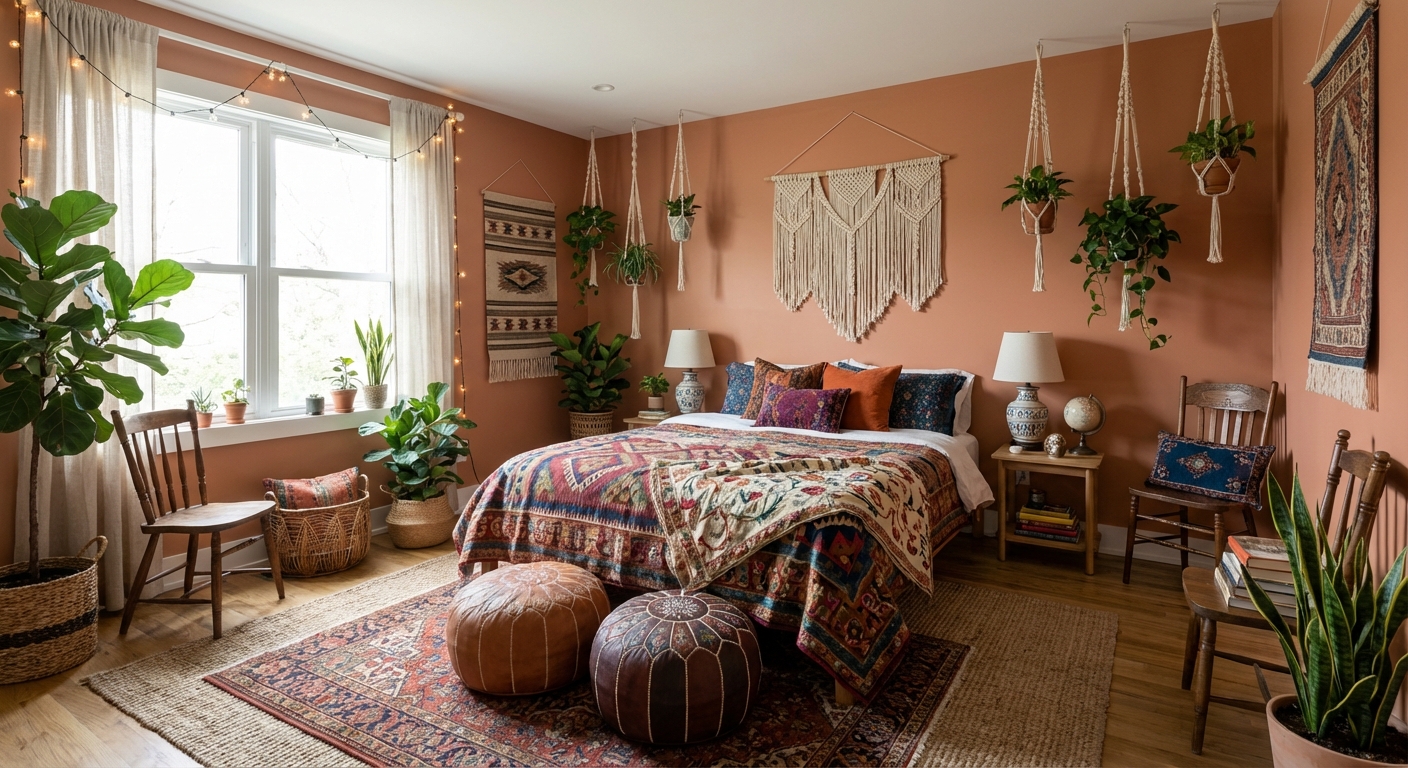
Dining Room · bohemian
All dining room ideas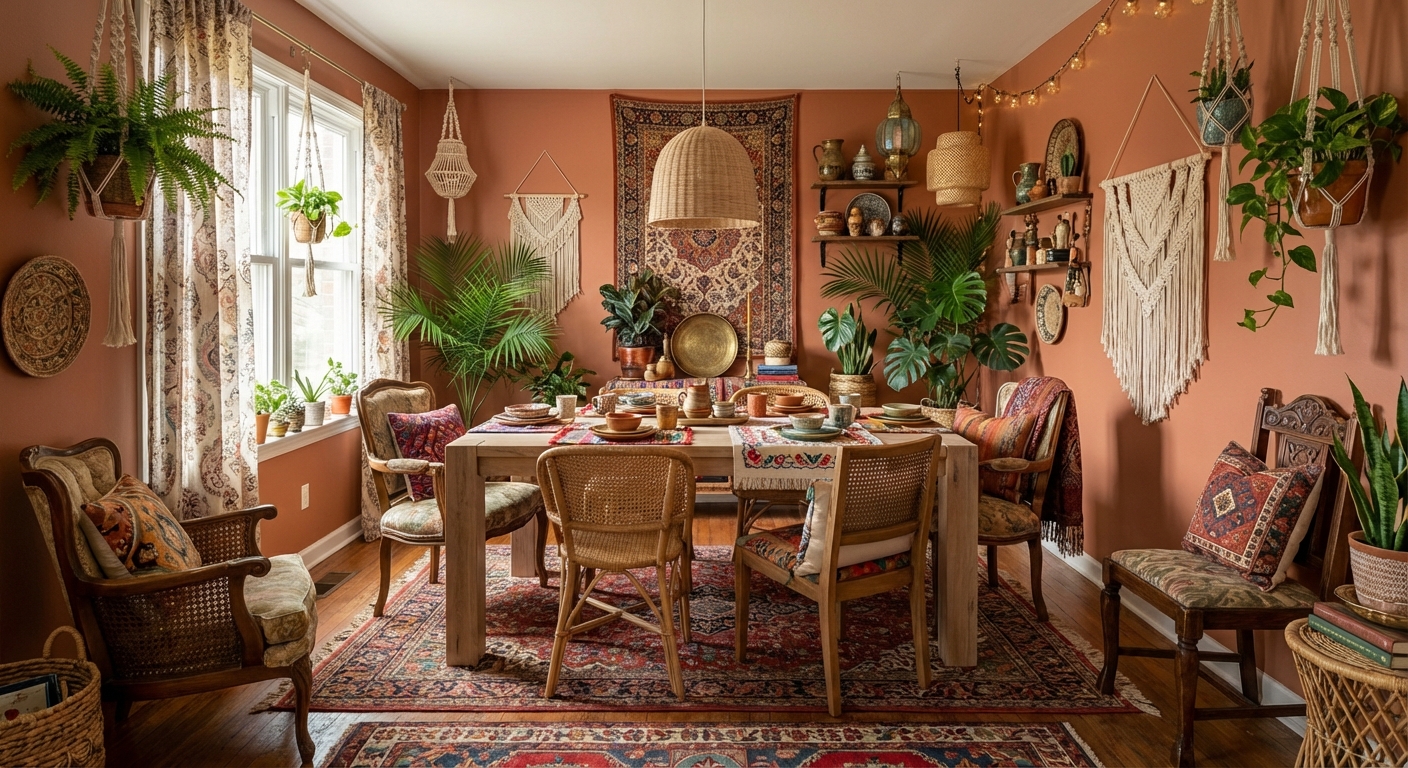
Outdoor Patio · bohemian
All outdoor patio ideas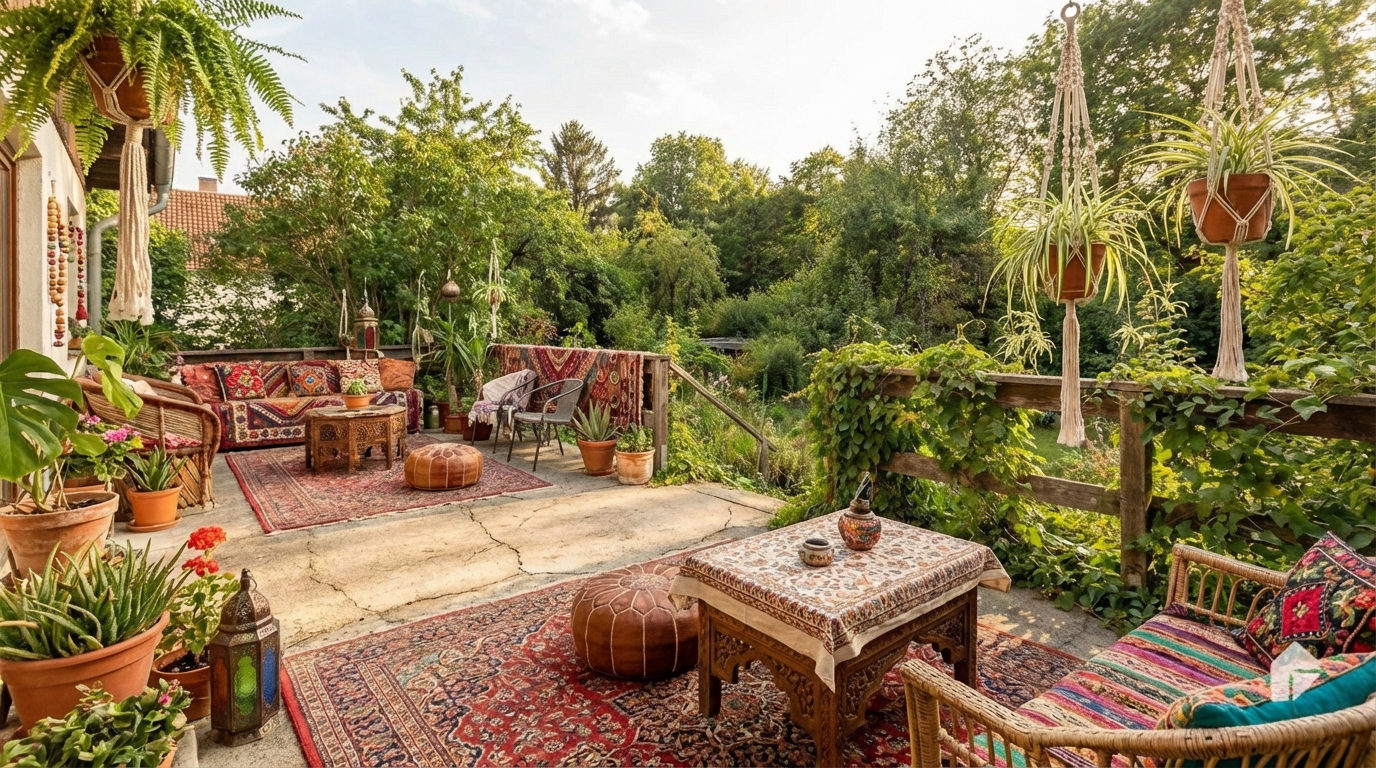
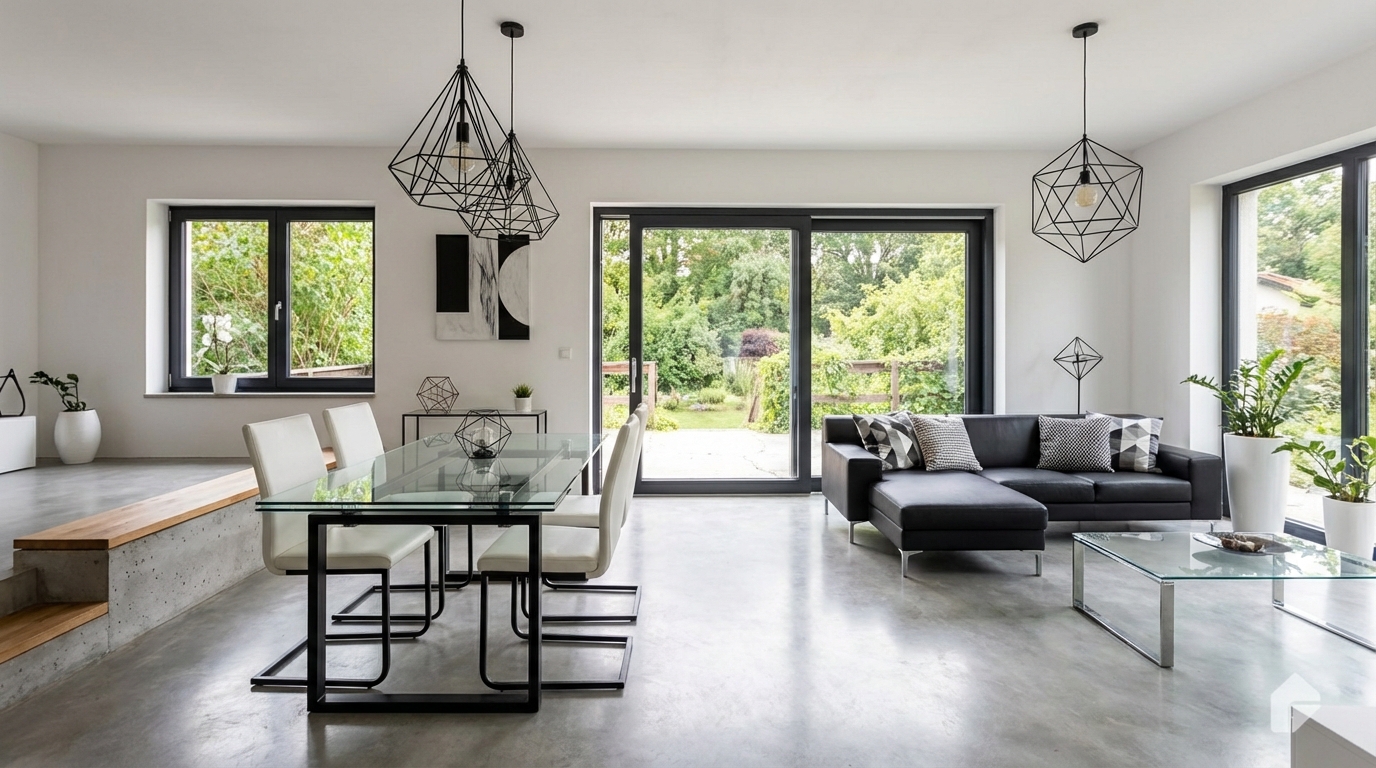
More bohemian ideas
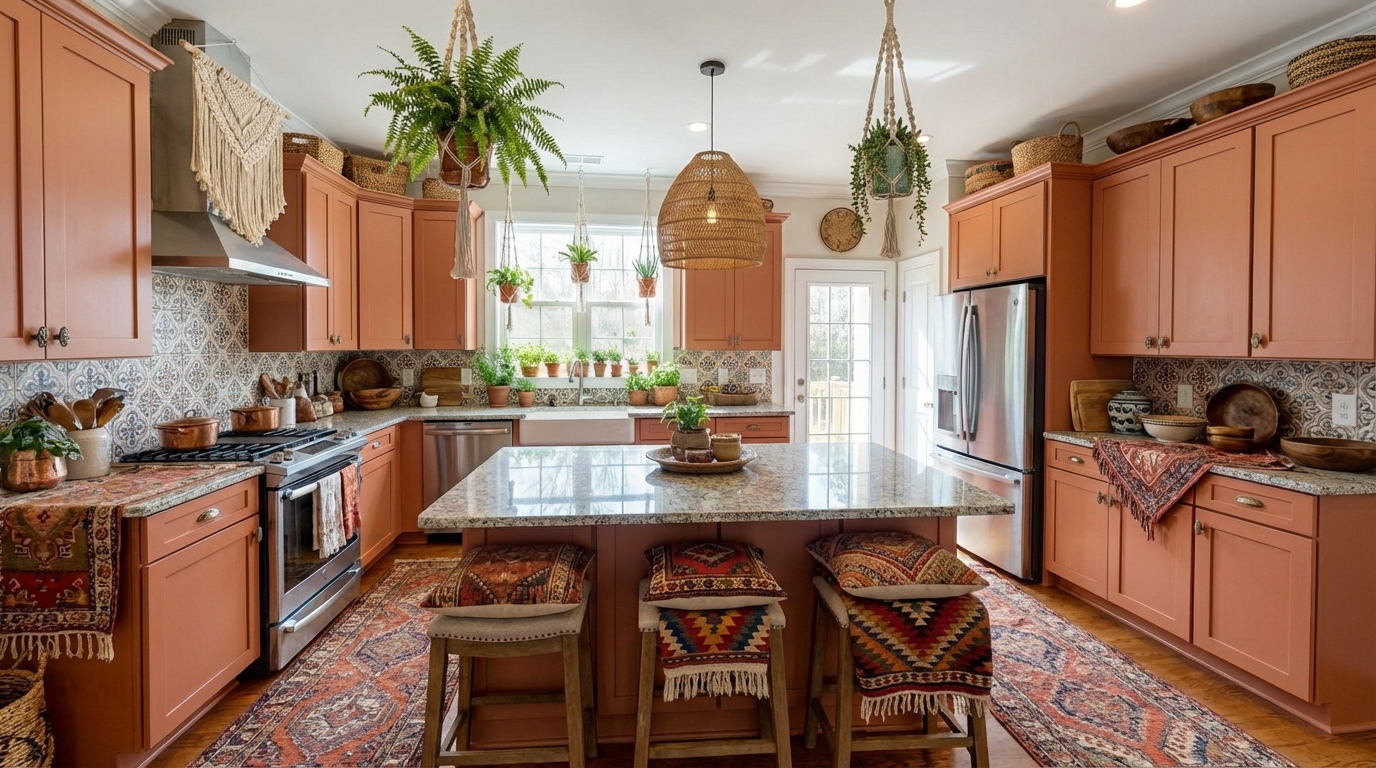
Bohemian Kitchen Design Ideas
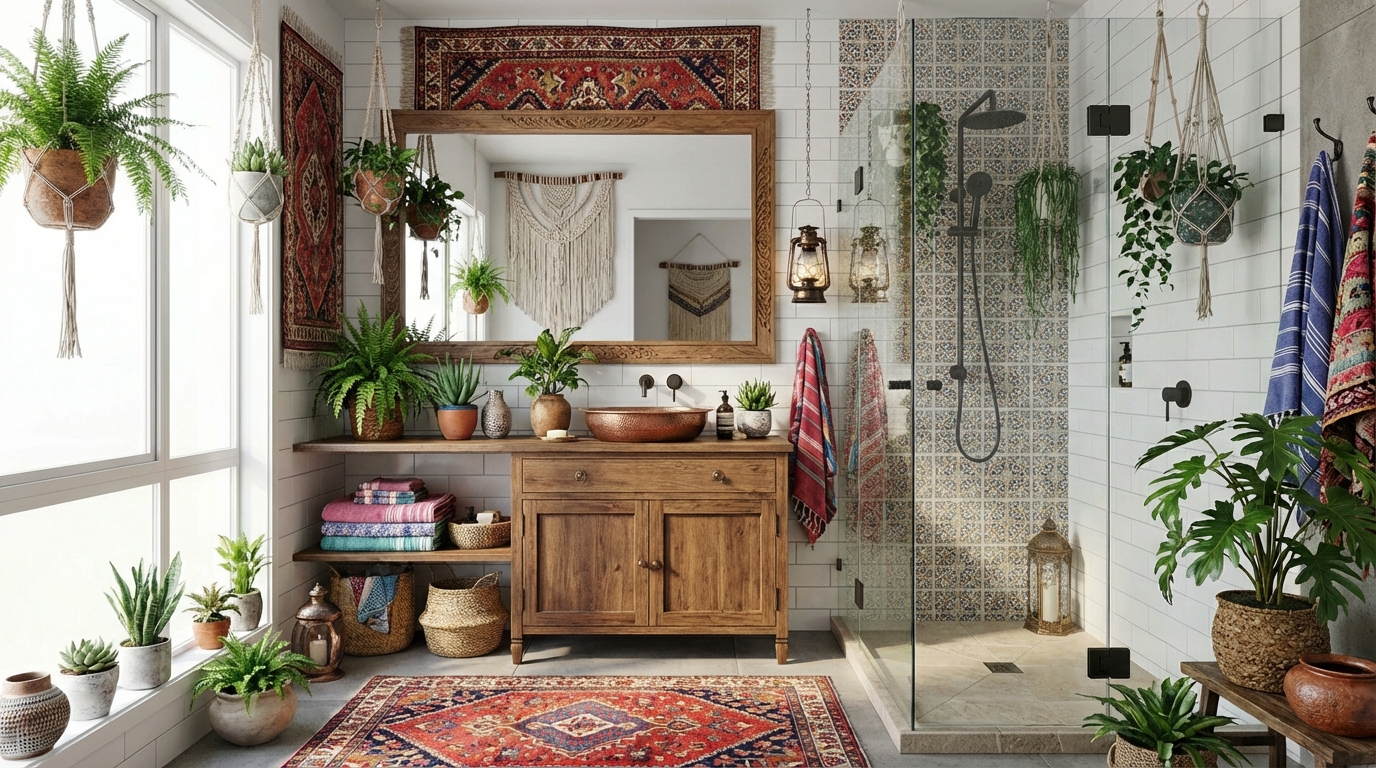
Bohemian Bathroom Design Ideas
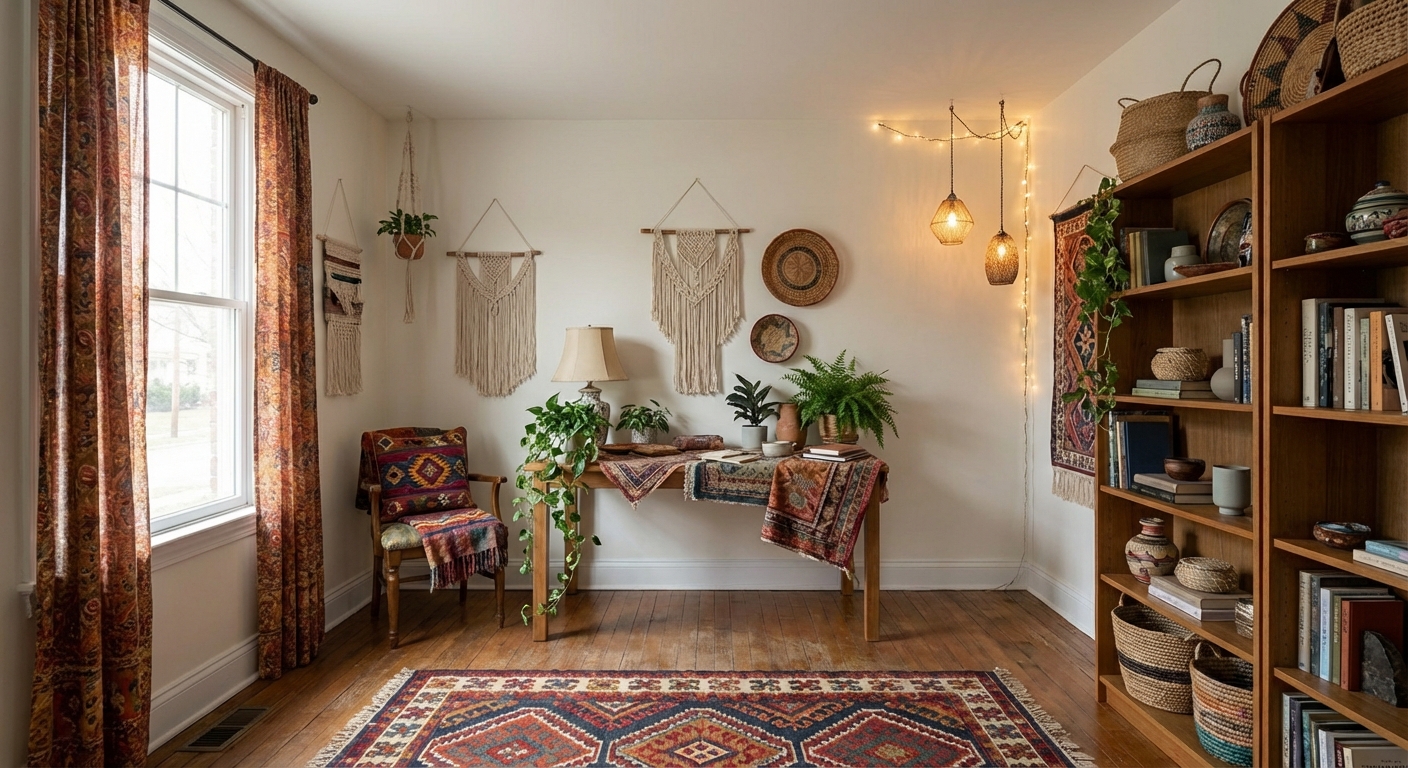
Bohemian Home Office Design Ideas
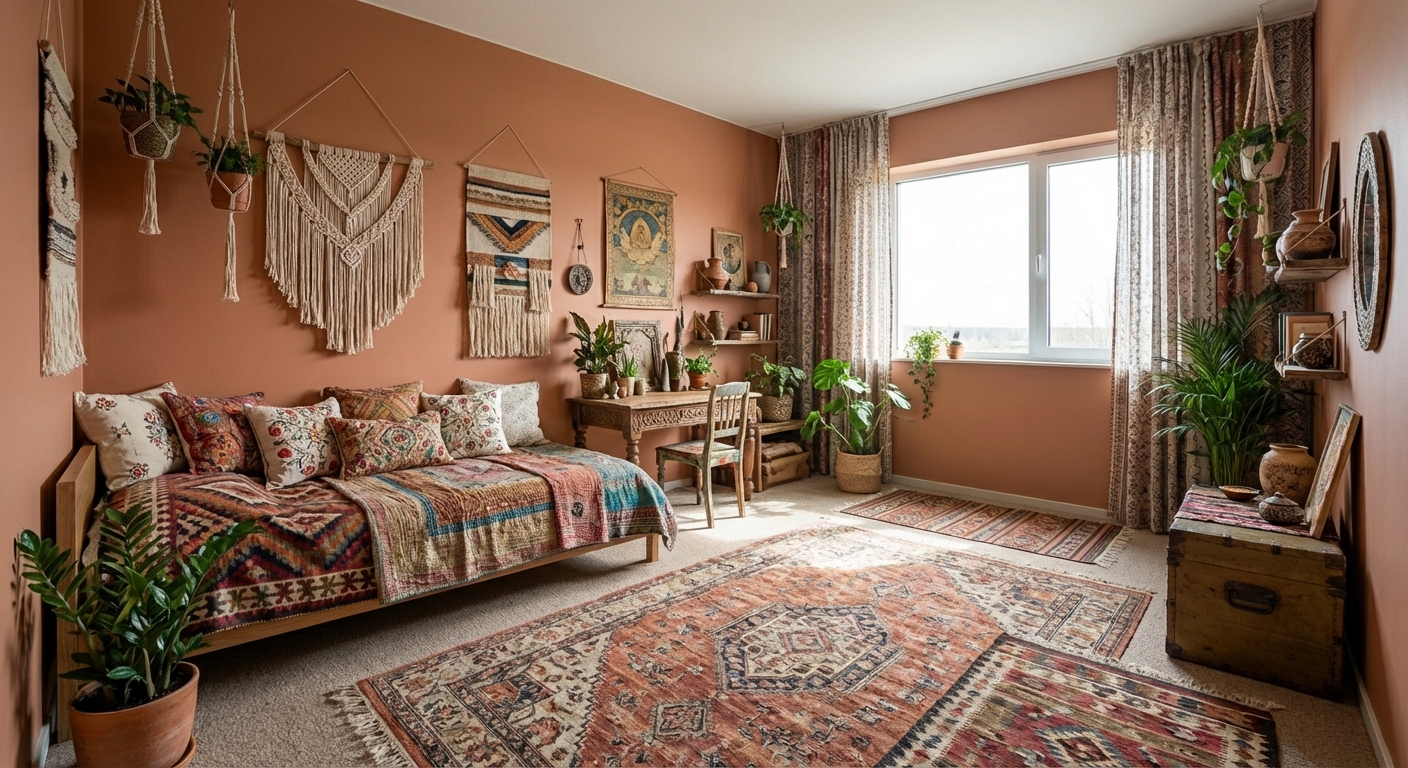
Bohemian Kids Room Design Ideas
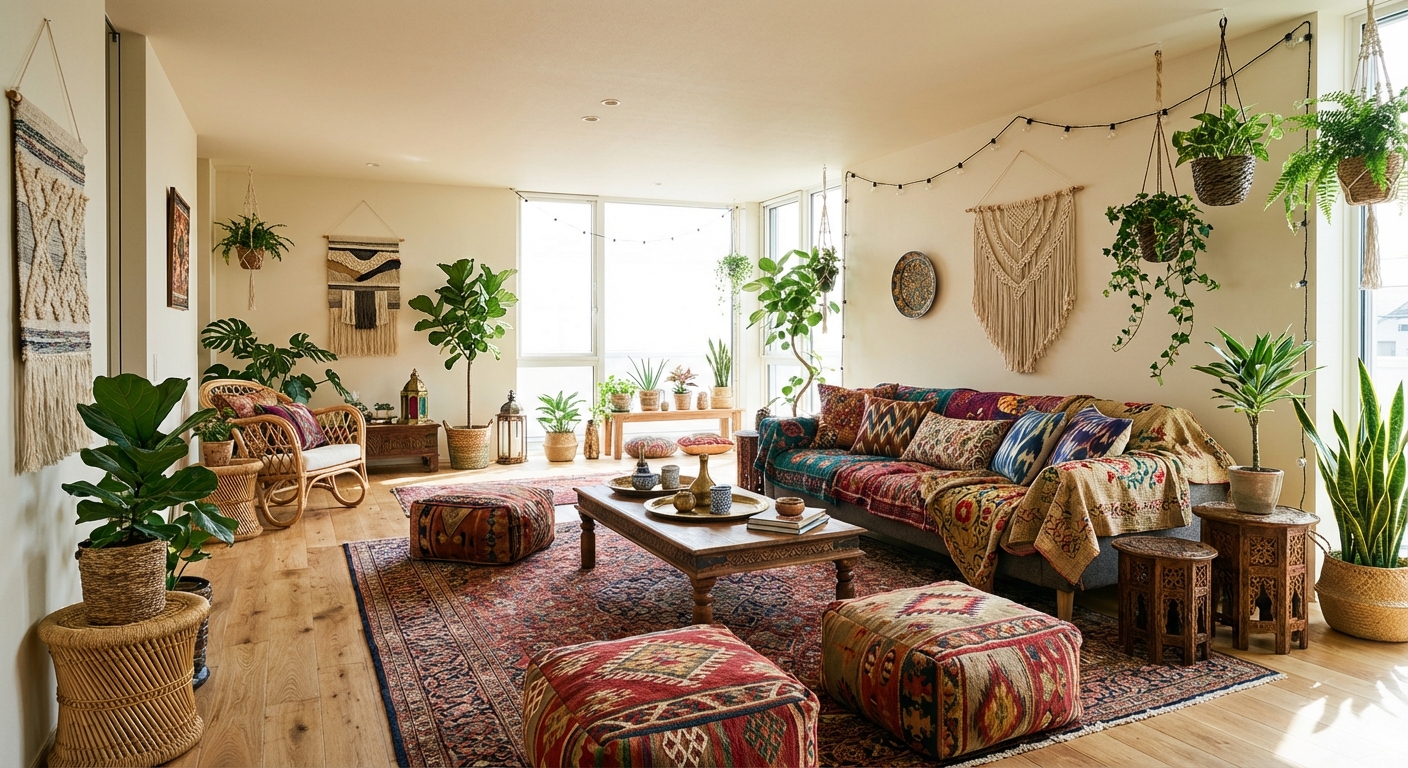
Bohemian vs Eclectic: Understanding the Difference
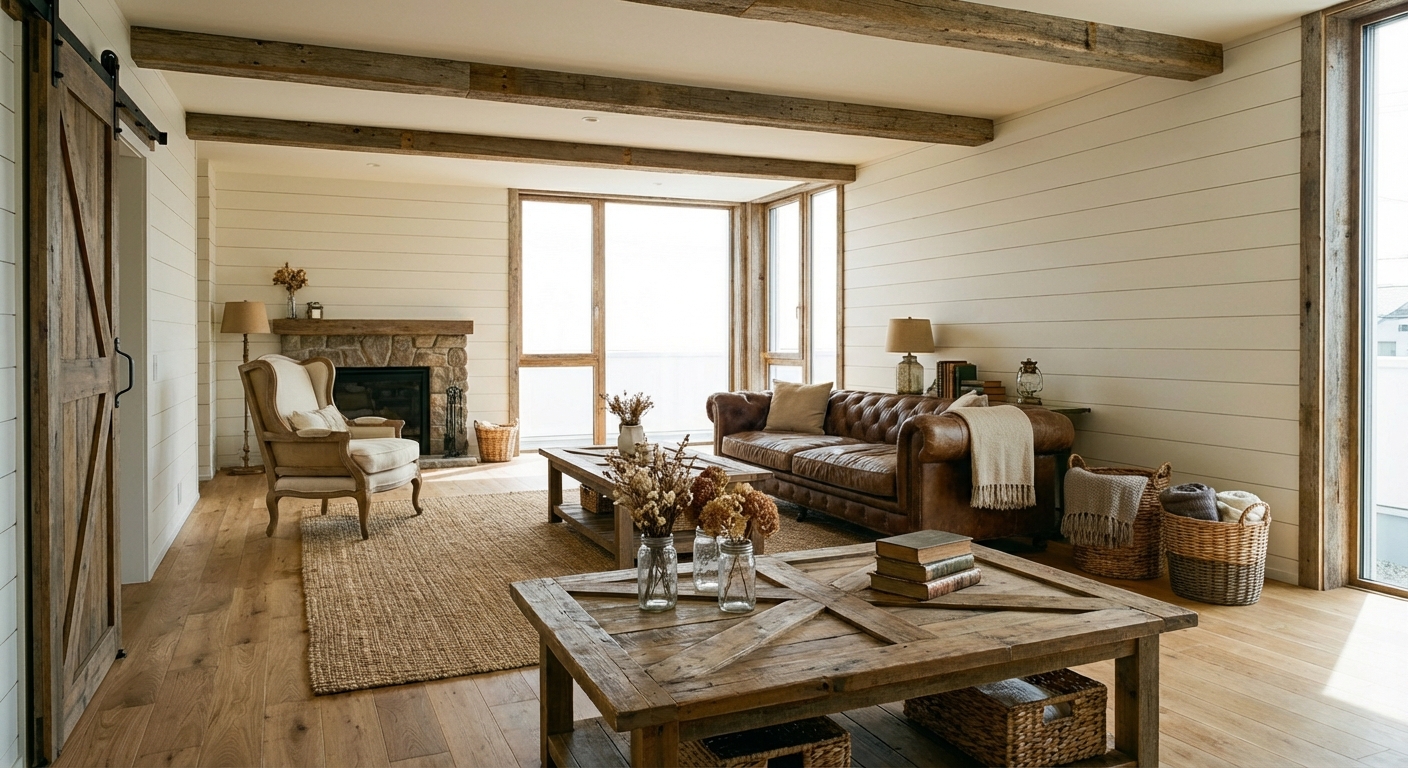
Bohemian vs Farmhouse: Free Spirit vs Country Charm
Cottagecore vs Bohemian: Pastoral Charm vs Free-Spirited Layers
Biophilic vs Bohemian: Nature Integration vs Eclectic Free-Spirit
Complete Guide to Bohemian Style
Try bohemian on your room with AI
Styles look different in every room. Upload a photo, choose bohemian, and compare the palette, furniture scale, and material direction on your actual space before buying anything.
Quick answers about bohemian style
Move between style and room views or preview the direction on your space.
Frequently Asked Questions
Q1 How do I keep bohemian from looking cluttered?
Use a tight color palette (three to five tones max — for example cream, terracotta, rust, and muted sage), layer textures rather than patterns, and leave at least one surface (a wall, the coffee table, or a shelf) deliberately quiet so the eye has somewhere to land. One vintage rug with real depth beats three competing patterned ones.
Q2 Does bohemian need bright colors?
No. Some of the best contemporary boho rooms use warm neutrals — cream, taupe, terracotta, warm clay — with color showing up only in plants and one or two textiles. The dated version of bohemian (bright jewel tones, piled fringed pillows, macramé overload) is exactly what the current direction avoids.
Q3 Can bohemian work in a small room?
Yes, but discipline matters more. A small boho room needs fewer pieces, tighter edits, and one true focal point — or it reads chaotic fast. A 100-square-foot bedroom can carry one vintage rug, one patterned textile, and one plant without overwhelming; beyond that, subtract rather than add.
Q4 Can AI preview bohemian?
Yes — test the palette and layering level before buying. It is an easy style to overshoot, and previewing prevents expensive mistakes.
Preview bohemian on your real rooms with AI
Upload a photo in the free visualizer and preview the look before you buy paint, furniture, or a renovation.