Industrial Interior Design That Does Not Feel Like a Warehouse
Industrial design borrows the vocabulary of factories and warehouses — raw materials, honest structure, exposed mechanics — but the rooms that work as homes temper that language with warm wood, soft textiles, and proper lighting. The style came out of 1970s and 80s loft conversions in New York, London, and Berlin, where tenants inherited exposed brick, cast-iron columns, and industrial ductwork and learned to live with (rather than hide) those materials. The best industrial interiors feel strong and grounded, not cold or theatrical. The mistake most new-build industrial rooms make is chasing the aesthetic without the structure — faux brick wallpaper, decorative pipes, and Edison-bulb pendants without the loft bones behind them. A genuine industrial room reads when at least one architectural element carries weight: an exposed brick wall, a raw concrete floor, exposed ceiling joists, or a black-framed steel window. Everything else (leather seating, a substantial rug, warm wood tables, and layered pendant lighting) softens those materials into a livable space. Palette centers on warm browns, oxidized black, brick reds, and one or two muted accents.
Key elements of industrial style
- Exposed brick or concrete
- Black metal framing
- Warm wood counterpoint
- Pendant lighting
- Leather or heavy textiles
- Visible structural elements
Signature palette
Industrial rooms usually pull from a tight palette. Start with these and introduce bolder accents only once the base works in your lighting.
Popular rooms for this style:
Industrial ideas by room
Narrow a style direction to the room you are actually redesigning.
Living Room · industrial
All living room ideasKitchen · industrial
All kitchen ideas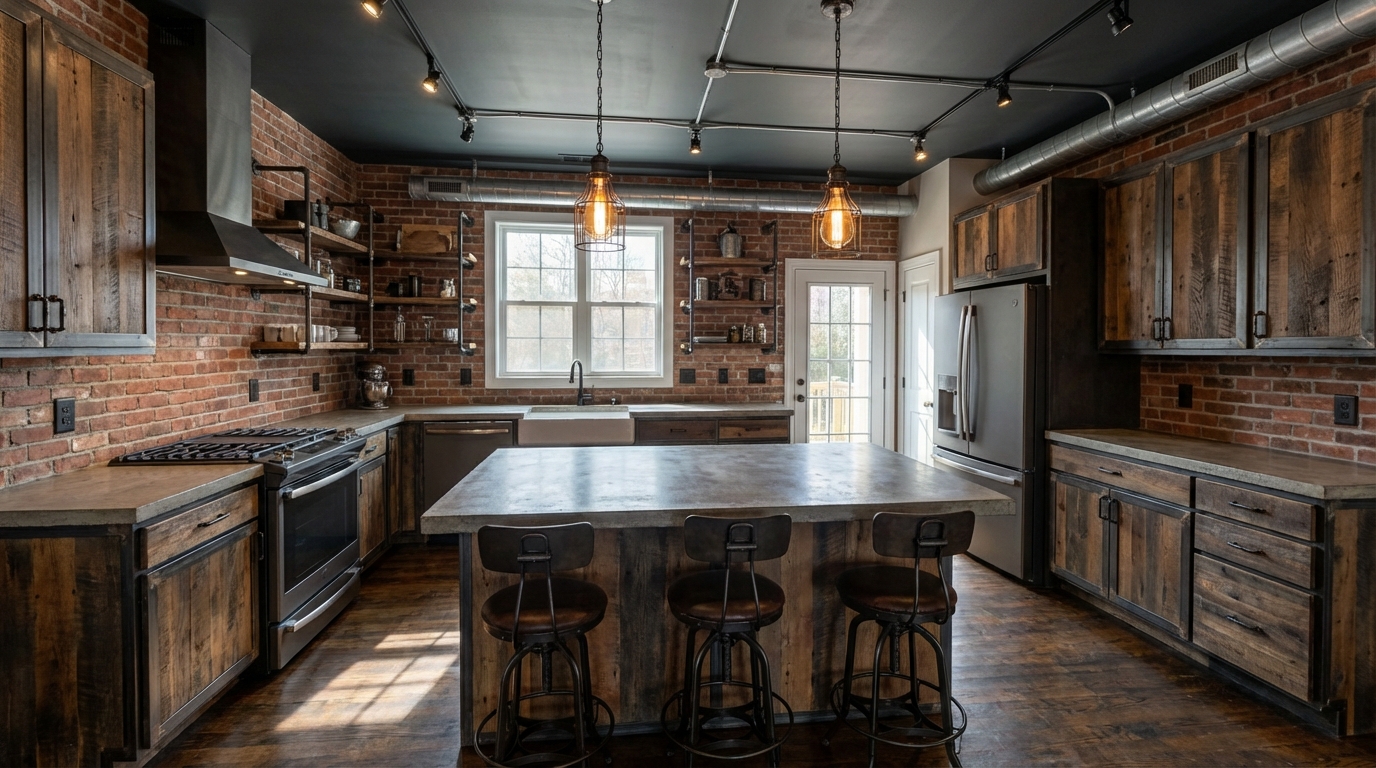
Bedroom · industrial
All bedroom ideas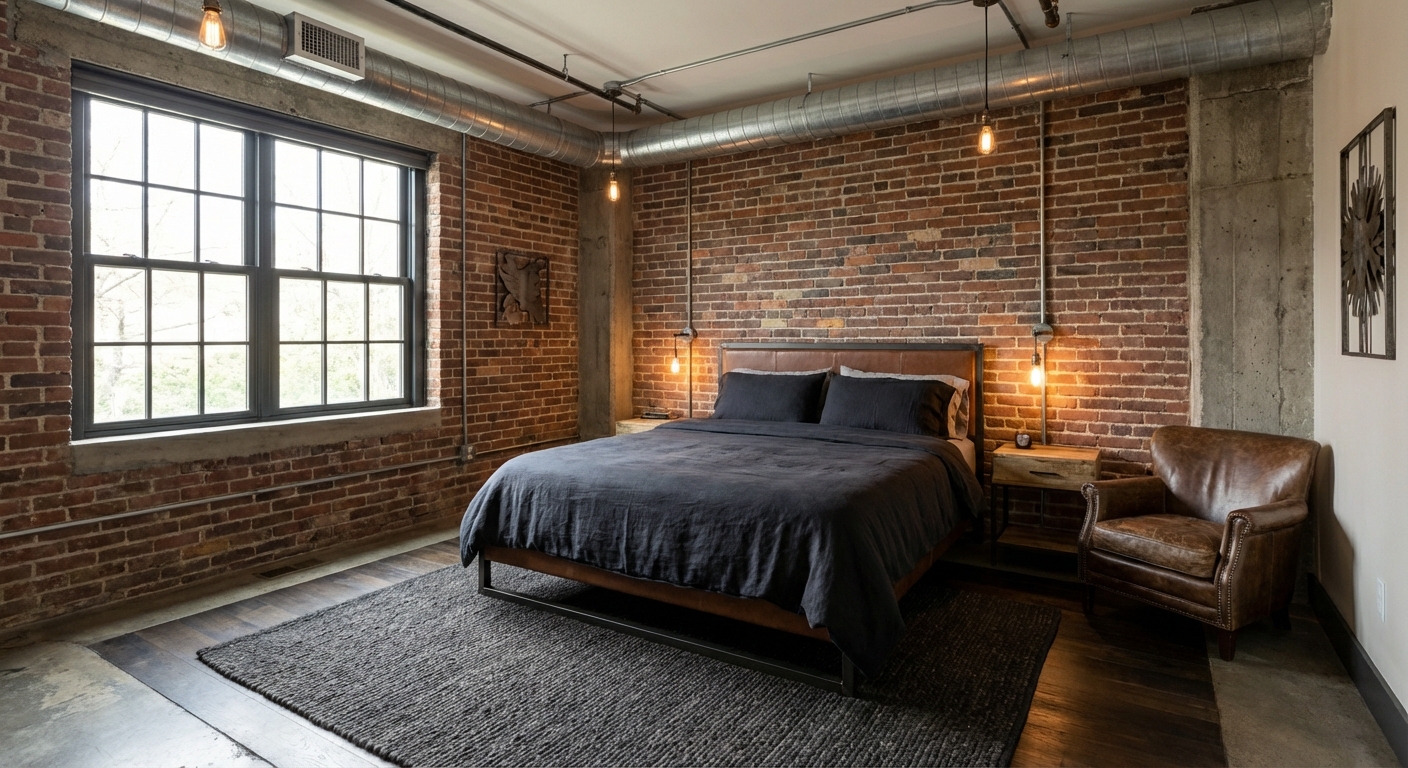
Home Office · industrial
All home office ideas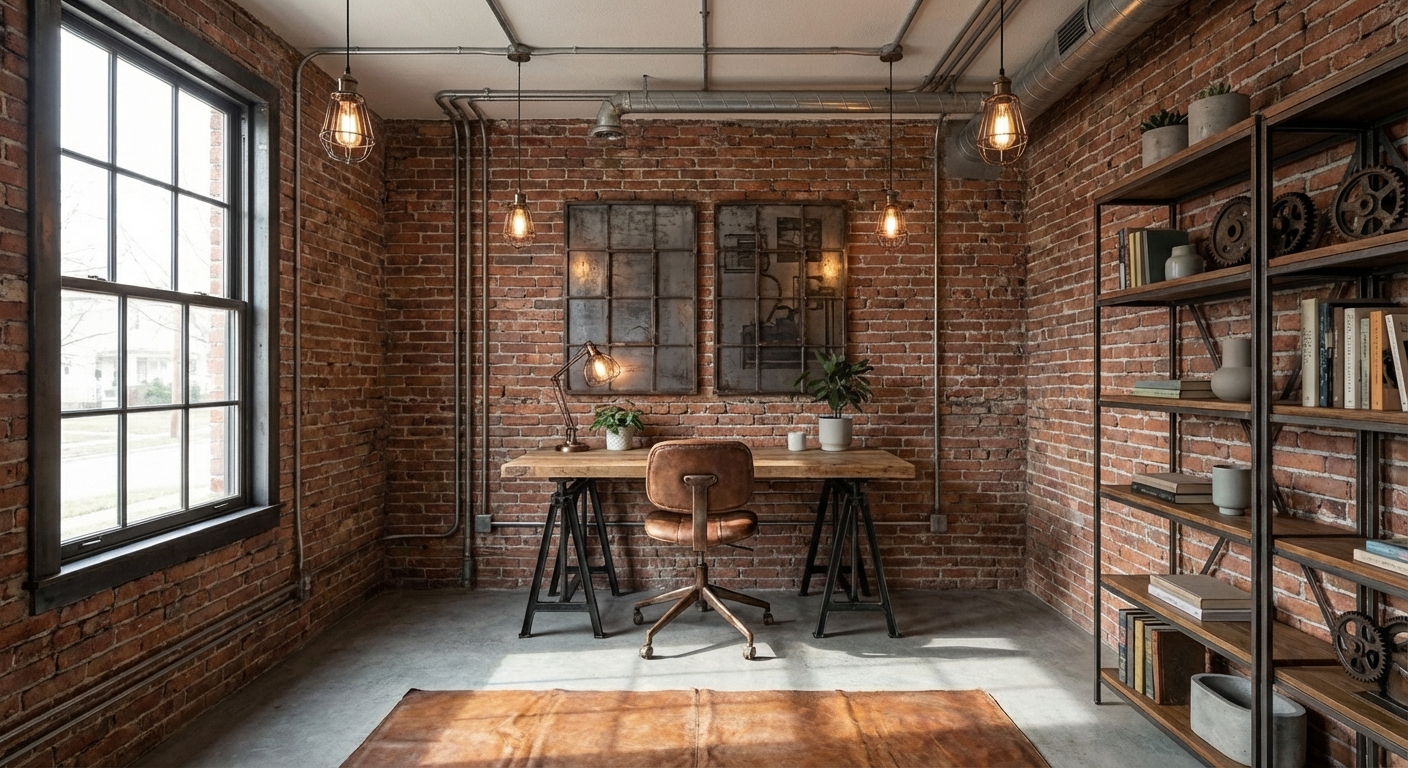
More industrial ideas
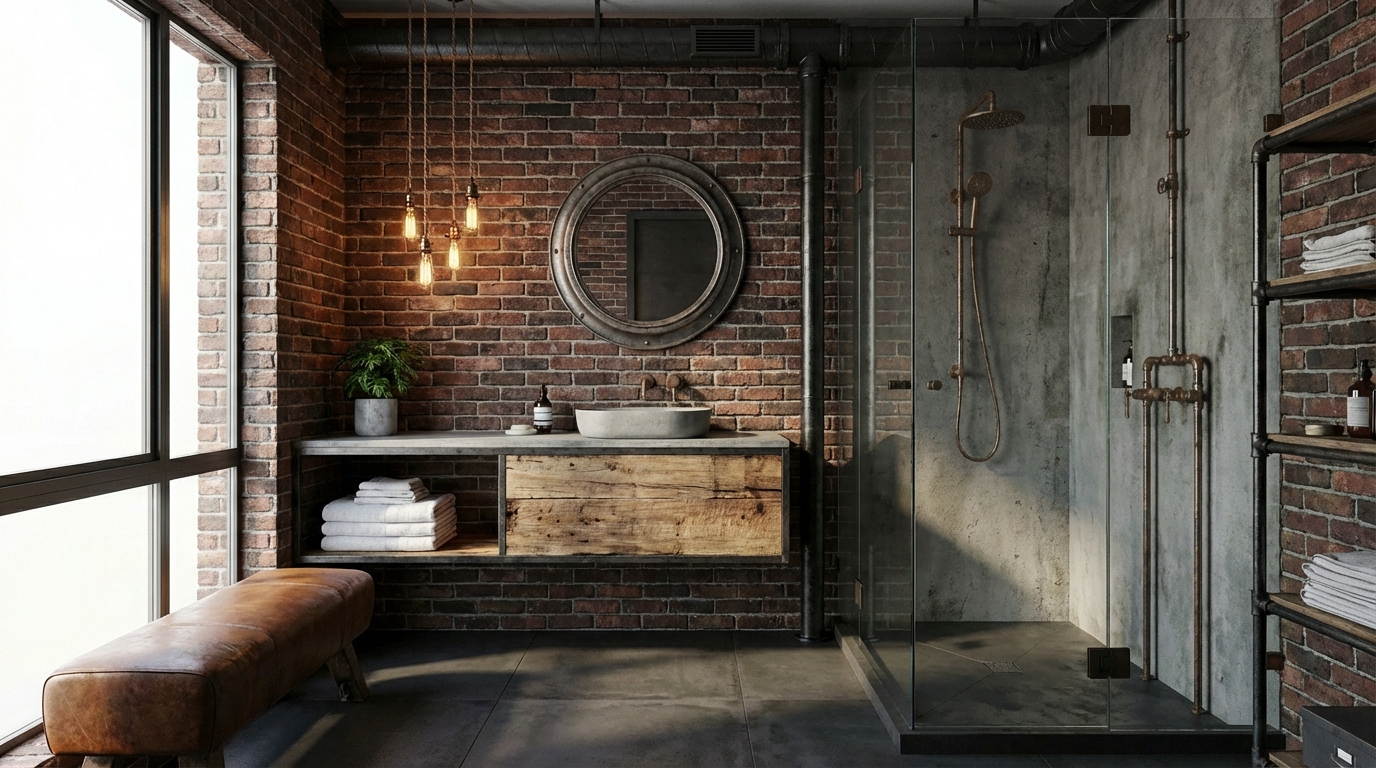
Industrial Bathroom Design Ideas
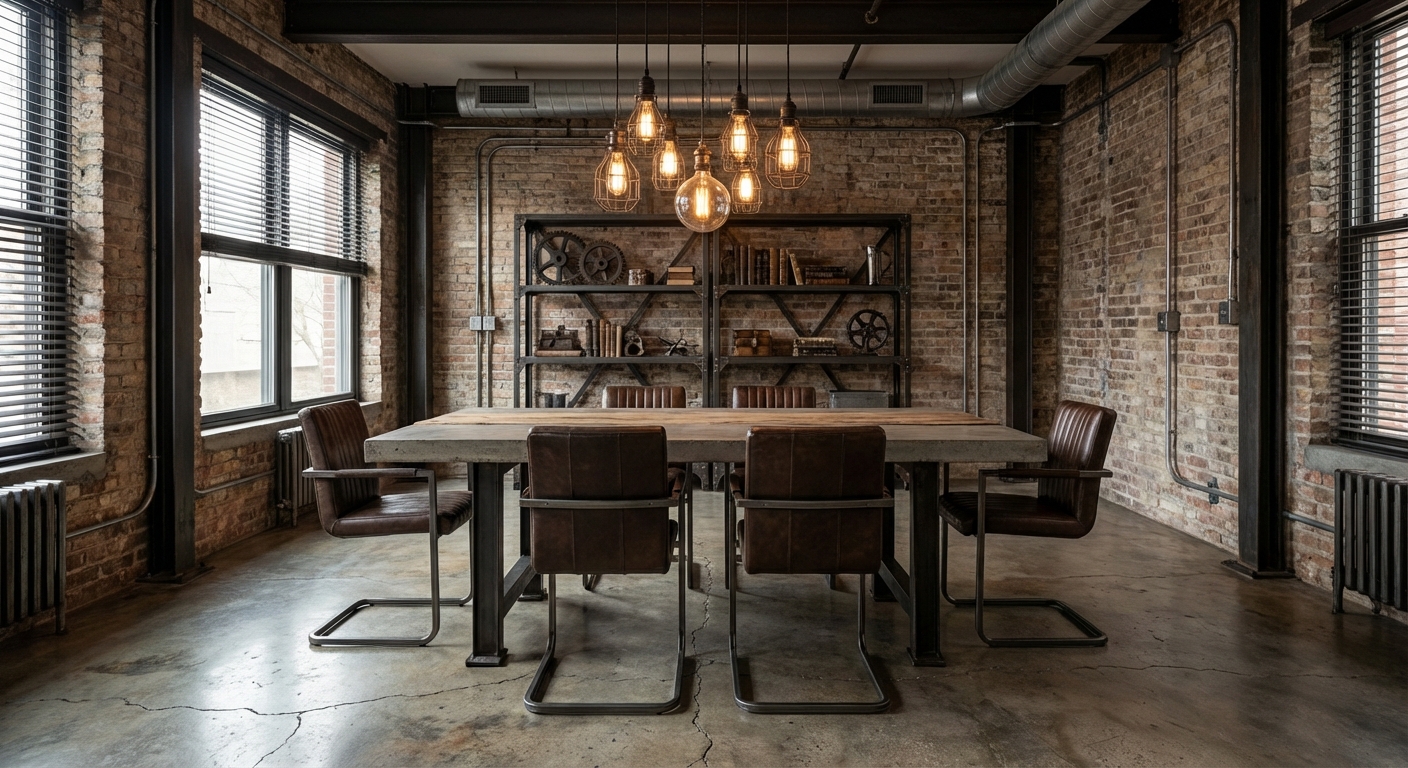
Industrial Dining Room Design Ideas
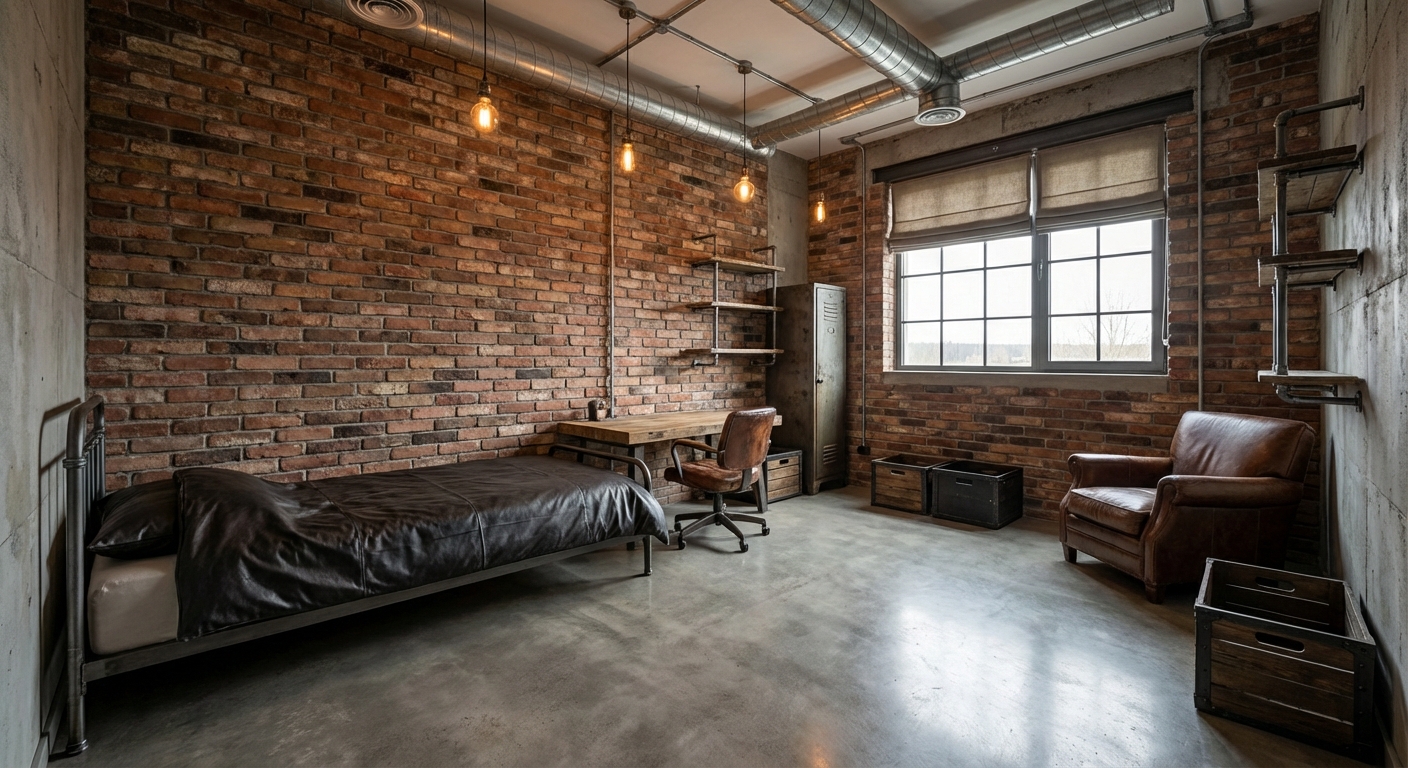
Industrial Kids Room Design Ideas
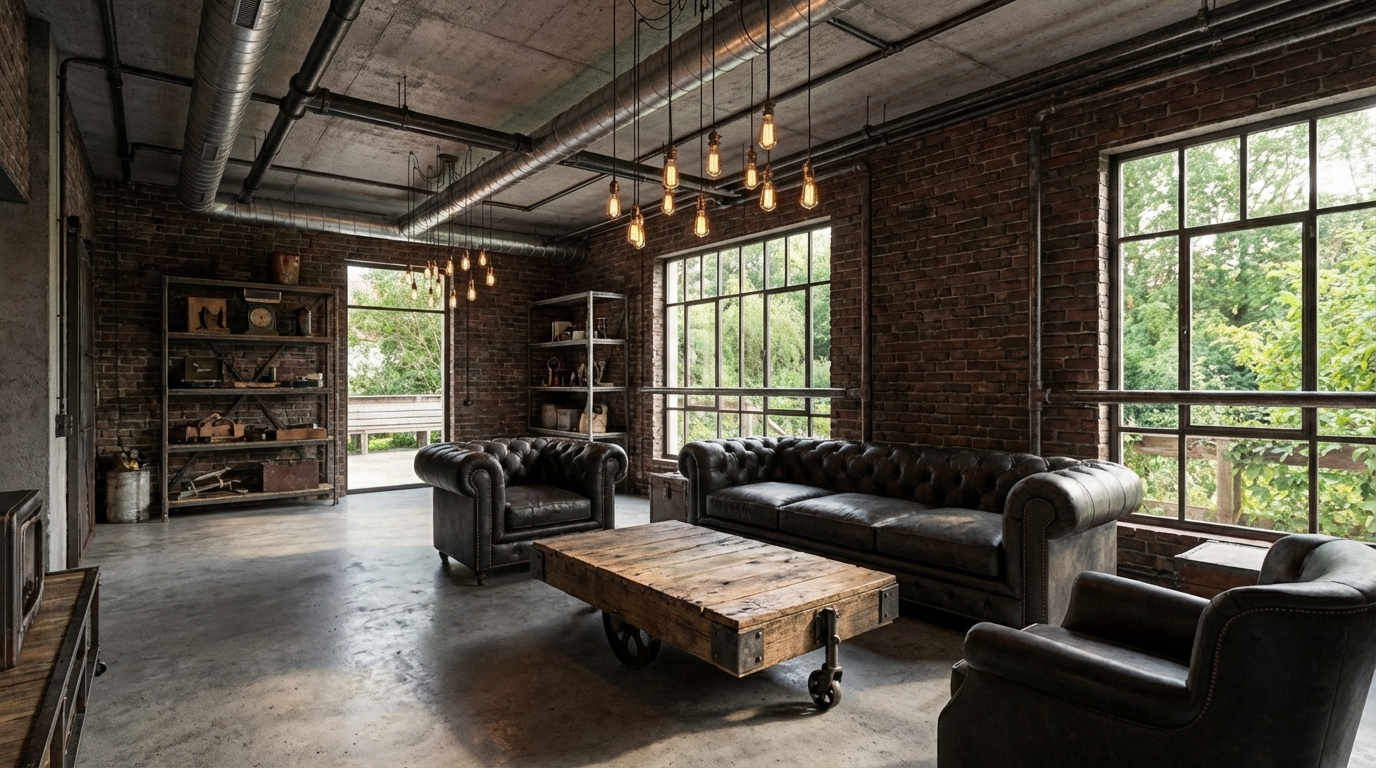
Industrial Patio Design Ideas
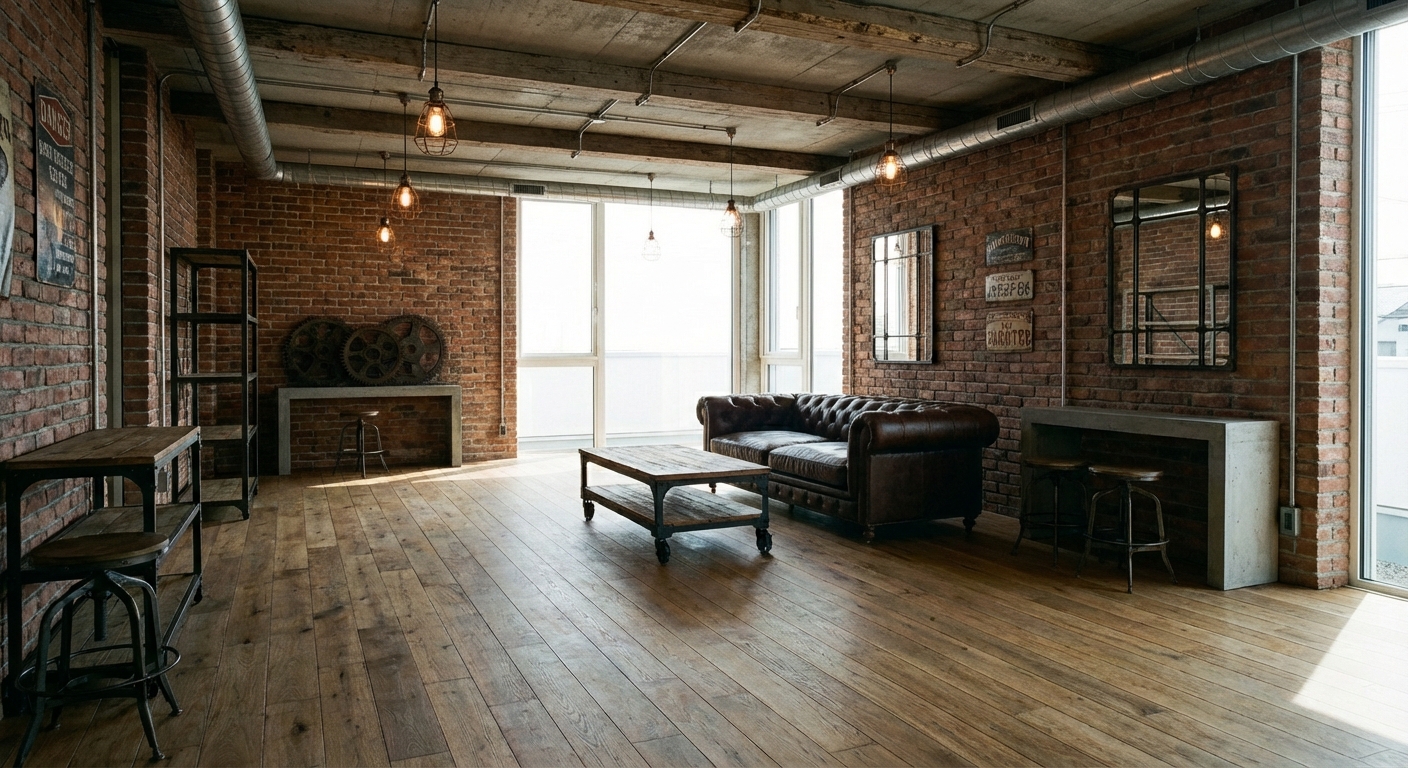
Industrial vs Mid-Century Modern: Which to Choose?
Industrial vs Rustic: Raw Materials, Different Stories
Rustic Modern vs Industrial: Natural Warmth vs Urban Edge
Complete Guide to Industrial Design
Loft Apartment Design Ideas
Try industrial on your room with AI
Styles look different in every room. Upload a photo, choose industrial, and compare the palette, furniture scale, and material direction on your actual space before buying anything.
Quick answers about industrial style
Move between style and room views or preview the direction on your space.
Frequently Asked Questions
Q1 How do I soften an industrial room?
Warm wood, a substantial rug (wool, vintage Turkish, or distressed Persian), and layered lighting at three heights. Leather also helps — a well-worn leather sofa or chair. Any one of them individually softens the room; together they keep an industrial space from reading like a warehouse showroom.
Q2 Does industrial style only work in lofts?
It works best with at least one architectural element — exposed brick, high ceilings, original wood beams, or black-framed windows. You can layer industrial furniture and finishes into a conventional house successfully, but lean on one meaningful architectural feature (a brick accent wall, a steel-framed interior door) rather than faux materials.
Q3 What is the biggest industrial mistake?
Too much metal with no warm counterpoint. Without wood, leather, or a substantial rug, industrial rooms tip into feeling cold and unfinished. The second biggest mistake is using decorative props (fake pipes, barn doors that go nowhere) to simulate loft bones that are not really there.
Q4 Can AI preview an industrial style?
Yes — brick, metal, and warm wood combinations are well represented and preview cleanly.
Preview industrial on your real rooms with AI
Upload a photo in the free visualizer and preview the look before you buy paint, furniture, or a renovation.